
There are artists who are impossible not to recognize. They have their own special handwriting, style and are quite easily recognizable. We will talk about such masters of painting.
Edouard Manet (1832 – 1883) is a leading impressionist, one of the best artists of the second half of the 19th century. Unlike most impressionists, Manet was born into a wealthy family and had a high social status. In addition, Manet sought recognition in official artistic communities, and instead became an example for artists of the latest trends.
Eduard admired the painting of the old masters, he was especially interested in Spanish painting. Velázquez, Zurbaran and other Spanish artists were much represented in the Louvre Museum thanks to Napoleon’s wars of conquest. Manet painted a number of paintings devoted to the Spanish theme.
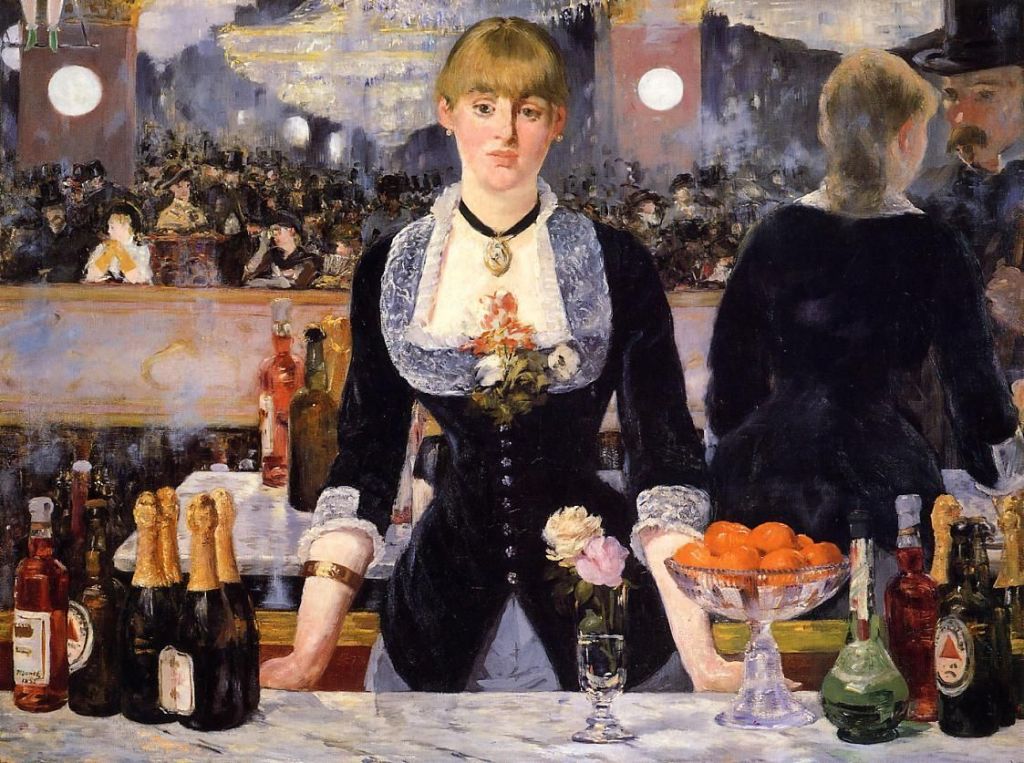
Manet inherited his parents’ money, married the woman he loved (although this did not prevent him from leading a lecherous lifestyle). He helped his colleagues a lot, who also could not sell their paintings and had no means of livelihood.
Edouard spent a lot of time in the Louvre, copying the paintings of the Old Masters, there he met Edgar Degas and Bertha Morisot. The story of Eduard’s relationship with Bertha deserves a screenplay. They supported each other and actively cooperated.
Claude Monet (1840 – 1926) is one of the founders of Impressionism and the artist whose name is associated with this direction of painting. Claude Monet actively researched lighting effects and painted the whole series of paintings depicting one object with different lighting.
Monet and Manet, along with other Impressionists, rebelled against academic rules and moved to the direct depiction of reality. For Monet, plein air painting was surprisingly important. Having received recognition, he created his own beautiful garden in Giverny, so that he would always have subjects for his paintings at hand.
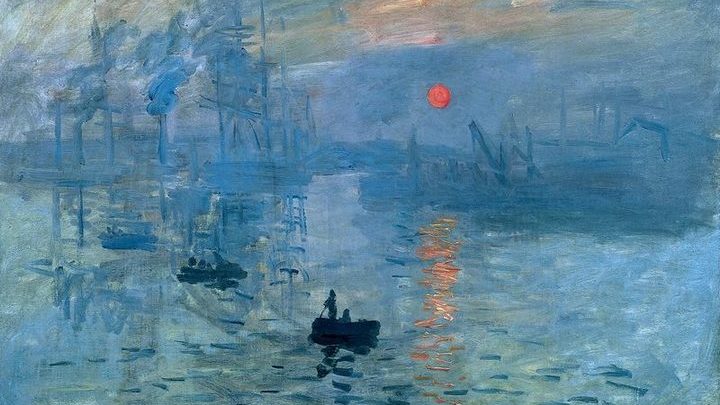
It is Monet’s painting «Impression, Sunrise» became the same picture that gave the name impressionism. Critics harshly criticized this painting as unfinished and unprofessional.
From 1880, Monet began to collaborate with art dealer Paul Durand-Ruel and his business went up, paintings began to sell. Monet is known to the general public mainly thanks to the «Water Lilies» series. Moreover, it has 250 paintings. But in addition to this series, the creative heritage of the artist includes other beautiful series of paintings such as «Rouen Cathedral» (1892-1894), «Gare Saint-Lazare» (1877), «Charing Cross Bridge» (1899-1905), «Haystacks» (1890-1891).
Paul Cézanne (1839 – 1906) – a master from Aix (Aix-en-Provence) – as his contemporaries called him, became the forerunner of Cubism and had a huge influence on the artists of the 20th century. He was not properly appreciated during his lifetime. His large solo exhibition organized by a French art dealer Ambroise Vollard, where 150 of the artist’s paintings were presented, did not cause a great resonance among the audience, but instead was popular among young artists.
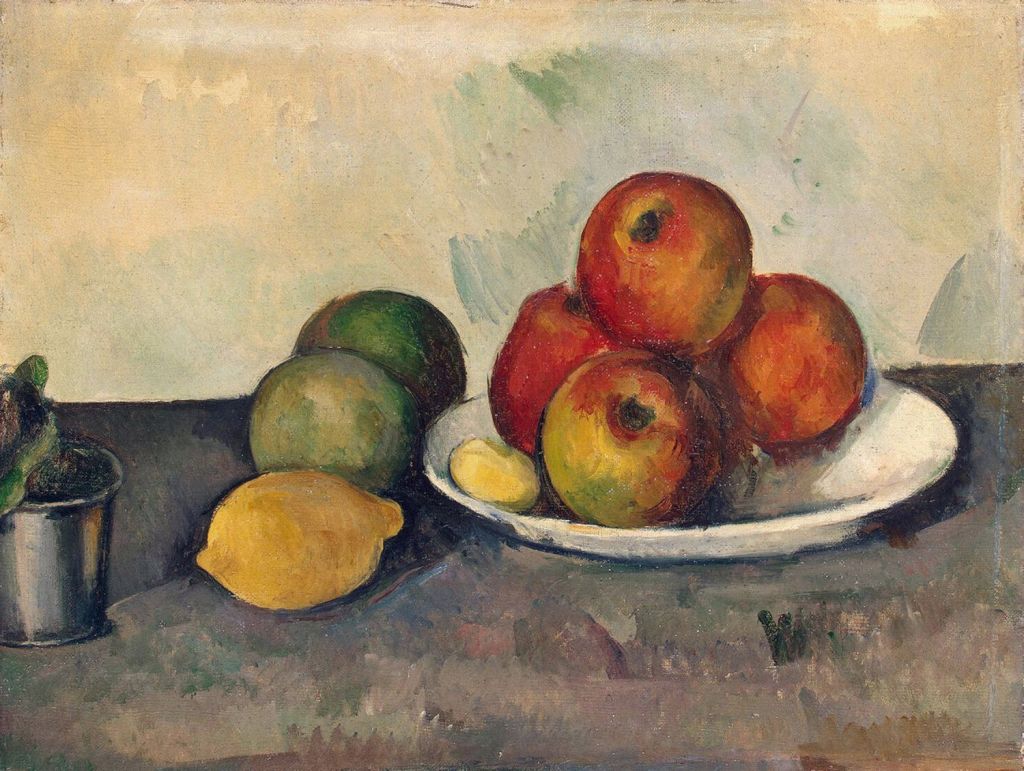
Cézanne was in constant search of a new artistic language. He specialized mainly in still lifes and self-portraits. Vollard, who posed for Cézanne, wrote in his memoirs that it was very exhausting. And if he began to fall asleep, the artist could throw something at the model.
Cézanne was essentially a recluse. Not being recognized in Paris, he returned to his native Aix-en-Provence and painted self-portraits, still lifes and Montagne Saint-Victoire. The artist experimented with different angles of view of the picture, paid great attention to color planes and geometric shapes.
Lucian Michael Freud (1922 – 2011) is one of the most successful artists of the 20th century, a portraitist, the grandson of Sigmund Freud. Lucian and his family were forced to flee Germany when the persecution of Jews began. He received an excellent art education in London. Unlike the leading artistic trends of the avant-garde of the mid-20th century, Freud was interested in figurative painting. He literally looked at his models under a microscope, he was interested in the texture of the skin, pores and all physiological features.
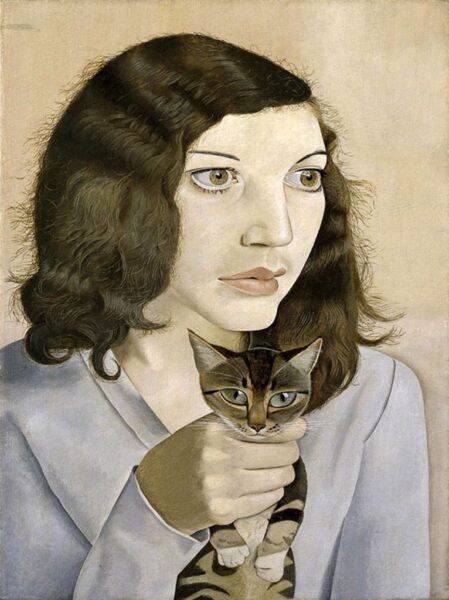
Freud chose a very difficult path in his work. Each painting exhausted him. He looked at his models closely, strained his vision as much as possible and was extremely tired from work.
Having a difficult and thorny path to recognition, Freud became the most expensive living artist. There is even Elizabeth II in the gallery of his portraits. Francis Bacon played a significant role in the formation of Lucian’s creative path. Despite their different style of painting and approach to work, Bacon became a certain guide for Freud, instilled in him faith in his own strength. Bacon’s portrait became iconic for Freud.
Lucian’s early work was characterized by smooth painting, but after close communication with Bacon, he switched to pasty strokes. His paintings became even more naturalistic and pure. His bodies are painted with maximum use of color. It is said that he washed his brush after each stroke to achieve the purest color possible.
Freud always painted from nature. Being his sitters is a separate job, because the artist needed a model during the entire time of working on the painting. The only exception was Queen Elizabeth II, who did not pose for Lucian.
Leonardo da Vinci (1452 – 1519) is an artist of the High Renaissance, a scientist, an inventor, a musician, an organizer of royal holidays, an engineer. This is not a complete list of Leonardo’s fields of activity.
He studied painting and sculpture in the workshop of Andrea del Verrocchio. According to the legend, the teacher put away his brushes when he saw how much the student surpassed him. The success and popularity that Leonardo has today, he could not even imagine during his lifetime. His plans were so large-scale that most of them remained unrealized.
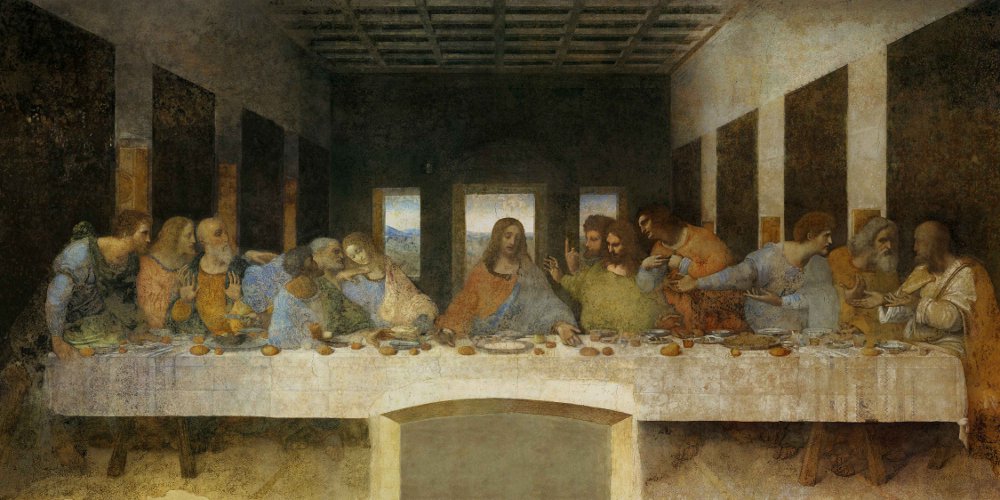
This is what happened with the equestrian statue for the Duke of Sforza, with the design of military vehicles, aircraft and much more. Nevertheless, Leonardo went down in history as an outstanding figure of the Renaissance. He was a person who was not afraid of experiments. Taking up the painting of the fresco «The Last Supper», he violated all the laws of fresco painting, as a result of which the work began to fall apart even before its completion. However, now this work of art is the most famous in the world precisely because of the revolutionary ideas implemented by the artist.
Work at the court of Ludovico Sforza promised the artist great prospects, and due to Sforza’s political troubles and conflicts with other states, much of what he planned was left unfinished.
Leonardo boldly destroyed the medieval canons, refused a rigid drawing, used an aerial perspective. His invention of «sfumato» still amazes viewers of «The Mona Lisa» («Gioconda») (1503).
Leonardo’s drawings and notes, which have not yet been fully deciphered, deserve special attention. He left a huge amount of work, which for several centuries did not find feedback from researchers.
Raphael Santi (Raffaello Sanzio) (1483 – 1520) was a High Renaissance painter, graphic designer and architect. He became a model for future generations of artists. His compositions and color solutions were a sample for the next three centuries.
Raphael studied with Piero della Francesca, the leading artist of the Umbrian school. In 1504, he moved to Florence, where Leonardo and Michelangelo worked. Raphael was quickly gaining popularity and creating competition for outstanding artists.
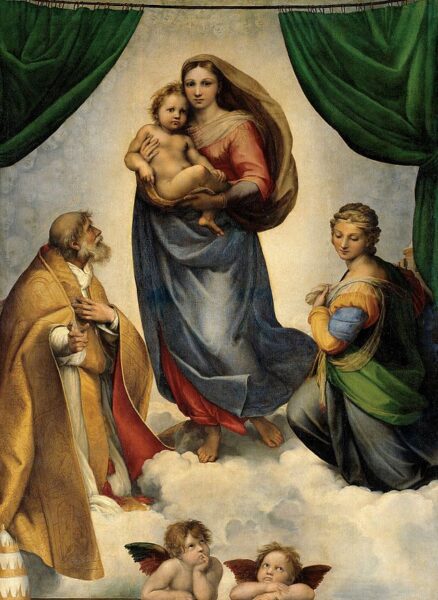
The artist is famous for his portraits of noble people and images of the Madonna. From Florence he moved to Rome, where he received an order to paint walls from Pope Julius II. This is how the world-famous Raphael Rooms (Stanze di Raffaello) appear. In Rome, he had an influential patron – the chief architect of Rome – Donato Bramante.
Raphael’s most famous easel painting is his «The Sistine Madonna», painted for the Church of St. Sixtus in Piacenza, and now adorning the collection of the Old Masters Picture Gallery in Dresden.
Rembrandt van Rijn (1606 – 1669) is an outstanding artist of the golden age of Dutch painting. Follower of Caravaggio and master of portrait painting and chiaroscuro modeling. Rembrandt is rightfully considered the best artist of the Netherlands of the 17th century. Unfortunately, his creative path turned out to be thorny. Having risen to the top of success, he became bankrupt, lost orders and was forced to sell all his property «under the hammer».
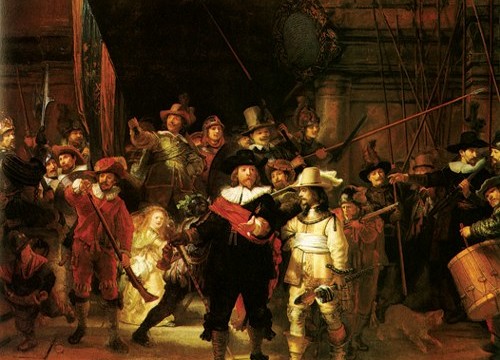
Rembrandt established himself as an outstanding portraitist. The Dutch society of the 17th century consisted of many professional associations, guilds, which ordered group portraits for themselves. One of such group portraits of the riflemen’s guild is now known under the name: «Night Watch». The giant painting is the jewel of the Rijksmuseum in Amsterdam, and at one time it played a wicked joke on the artist. The fact is that the image of each member of the guild was discussed in advance and paid for according to the person’s place on the canvas. Group portraits usually required a frontal view of the models and had the characteristics of a formal portrait. Archers were traditionally depicted at a banquet. Each of the 16 participants paid 100 guilders for their image as an equal among equals. Rembrandt broke the agreement, changed the composition of the picture and added the character of the girl, who is still a mysterious element.
Another group portrait «The anatomy lesson of Dr. Nicolaes Tulp» (1632) brought the artist real great success. Such anatomical theaters have been popular throughout Europe since the Renaissance. Leonardo da Vinci, by the way, specially attended anatomy classes at the Bologna Academy.
Self-portraits of the artist, of which he painted about sixty, deserve special attention. It was in the self-portraits of the last decade of his life that he achieved the highest skill. His images in the paintings are realistic and insightful. Probably, there was never a portraitist who would surpass Rembrandt in his skill.
Hieronymus Bosch (1450 – 1516) is the most mysterious artist in history. Everyone has heard about Bosch, but even specialists know very little about him. It is known about Bosch that he successfully married a wealthy woman, which provided him with social status. And also his affiliation to the Order of the Blessed Virgin Mary in the city of Hertogenbosch.
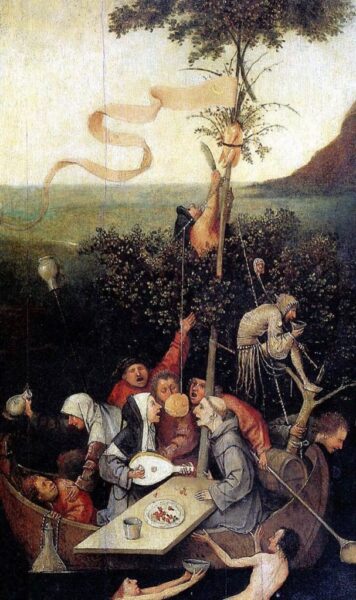
Bosch was a very ironic artist, sarcastically mocking human sins. Not many of Bosch’s paintings have come down to us. We do not know about his formation as a painter. In addition to the well-known works of the artist such as «The Garden of Earthly Delights» (1503-1515) or «The Haywain Triptych» (1516), he has less allegorical paintings. «Ship of Fools» (1490-1500) or «Cutting the Stone» (also known as «The Extraction of the Stone of Madness») (1494) can serve as a vivid example. These paintings make fun of human stupidity, the naive nature of simpletons and credulity. In both paintings, Bosch satirically depicts clergymen. He openly mocks the monks and nuns, showing their sinfulness at closeness of views.
Pieter Bruegel the Elder (1525 – 1569) is the main representative of the artistic dynasty, a Flemish painter and graphic artist. Only 45 paintings of the master have reached us. But he had a large workshop and many students who painted in Bruegel’s style. To see Bruegel’s paintings directly, it is better to visit the Kunsthistorisches Museum (is an art museum in Vienna). The works of his students presented in all the museums of Europe.
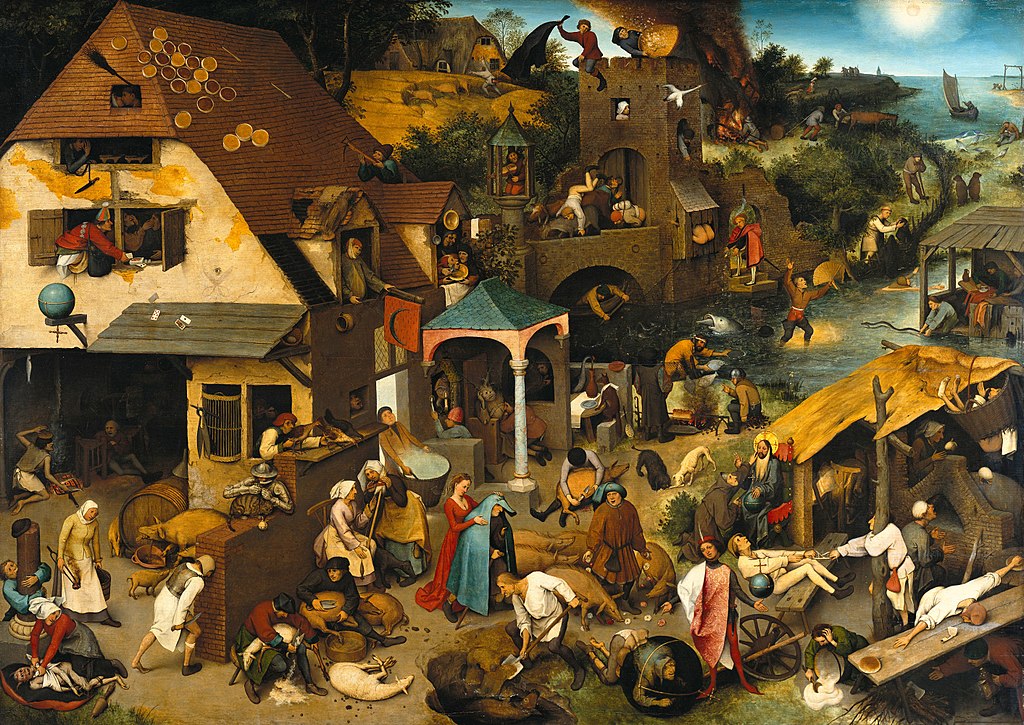
Bruegel’s creative handwriting was greatly influenced by the works of Bosch, which he studied. Bruegel is considered the founder of Flemish realistic painting. He, like Bosch, harshly criticized the vices of people in his society, ridiculed stupidity and human sins. Local folklore plays an important role in the painterly tradition of Bruegel.
«Netherlandish Proverbs» (1559), «Fight between Carnival and Lent» (1559), «Children’s Games» (1560) are the most famous and characteristic paintings of the artist.
You can learn more about outstanding artists at the art lectures about the History of European Art. And you can try yourself as an artist by visiting our creative master classes.
Make your loved ones happy – buy a gift certificate for master classes or lectures of the Lihtaryk art studio and find another favorite place – where to go in Kyiv.
У меня синдром Стендаля сегодня. Утром ходили в Падуанский баптистерий. Смотрели фрески Менабуя. А после обеда у нас было посещение каппелы Скровеньи. Теперь я понимаю , что сделал Джотто для мира. Очень меня все это впечатлило в живую. Привет передала. Мир прекрасен. Падуя очень понравилась:) спасибо за лекции Света!
Lily Golovchak
Our location


