
Oleksandr (Alexander, Olexandr) Archipenko (1887-1964) – is one of the best sculptors of Ukraine and the world. Unfortunately, due to the ban on his name during Soviet times, Ukrainians know very little about him. Therefore, we will fix it. I would like us to know our artists and be proud of Archipenko, as the French are proud of Rodin, or the Italians are proud of Michelangelo.
Oleksandr Archipenko is one of the founders of cubism in sculpture, a member of the American Academy of Arts and Letters. The future sculptor was born in 1887 in the Kyiv family of Kyiv University professor Porfiry Archipenko.
As a child, the future sculptor had the makings of becoming a mathematician, but a severe leg fracture, the need to lie down for a long time, and the grandfather’s ingenuity changed the story.
To keep little Alexander from getting bored, his grandfather, who was an icon painter, gave his grandson albums with Michelangelo’s works to copy. It should be noted that the illness gave impetus to creativity not only to Archipenko. Antonio Gaudi and Frida Kahlo had a similar story.
From 1900 to 1902, Oleksandr studied at the Gottlieb Walker Real School in Kyiv. It was a private gymnasium in the city center. Then, until 1905, he studied at the Kyiv Art School, from where he was expelled for participating in a student strike.
From 1906, he continued his studies in the studio of Serhiy Svitoslavsky (Svetoslavsky). Svitoslavsky’s workshop was a refuge for young artists. And although Svitoslavsky himself was extremely far from the avant-garde in his works, he gave his students the opportunity to see the world through the eyes of artists and did not restrain their experiments. Therefore, many Ukrainian avant-garde artists came out of his workshop.
Then there will be many more attempts to study in various academies, all the way to Paris, and everywhere Archipenko will be cramped by academic restrictions. And he will return to his roots, start studying the sculpture of the ancient Greeks, Assyrians and Egyptians in the Louvre.
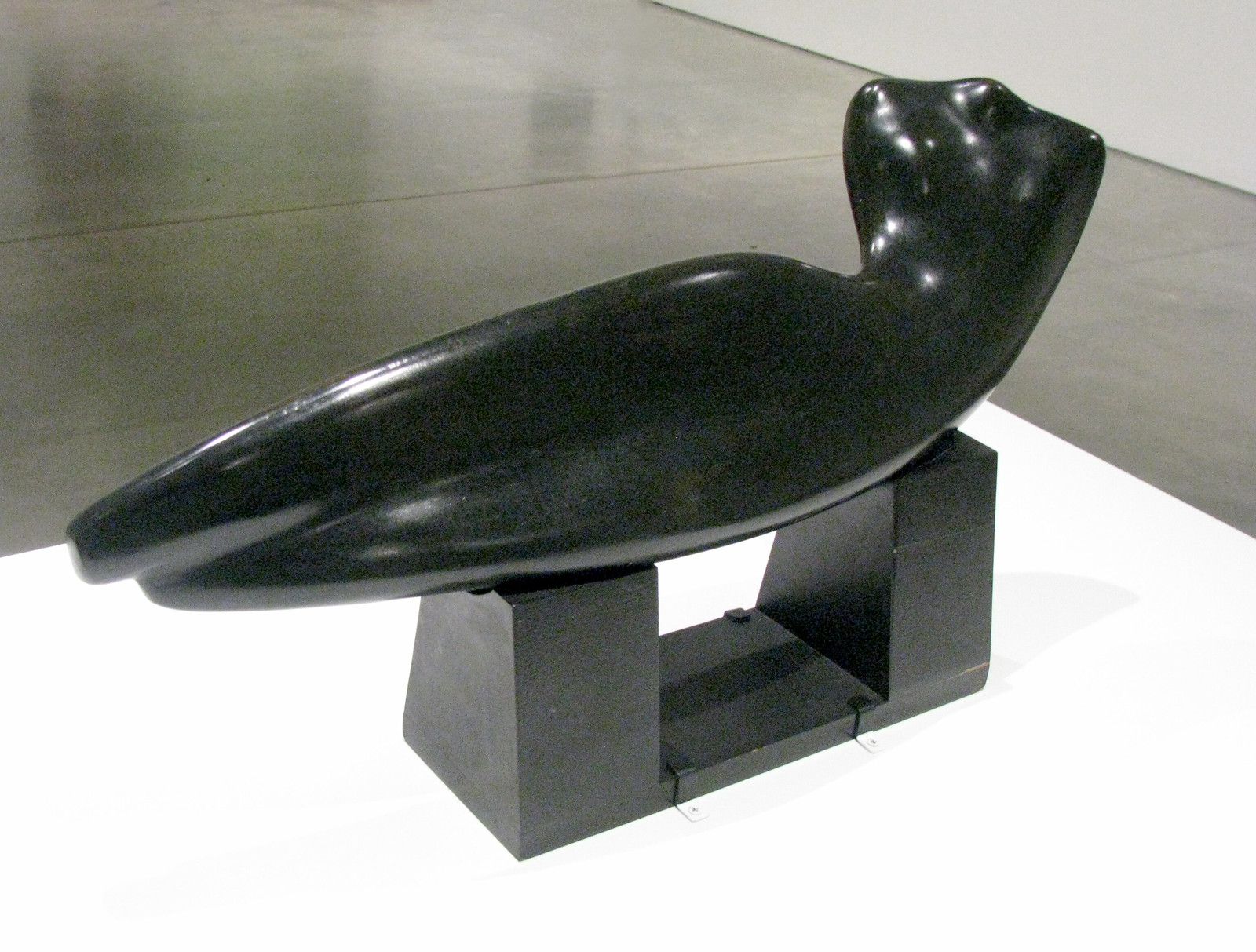
The lack of restrictions imposed by classical art education and boldness in experiments leads Archipenko to different materials. In addition to marble and bronze, which are the classics of sculpture, he uses glass, metal and wood. The artist paints his sculptures. By the way, ancient sculptures were not snow-white either. Sculptors of that time brightly colored their works.
It will not be superfluous to note that contemporaries did not immediately understand Archipenko’s innovation. But the most famous critic of the early 20th century, Guillaume Apollinaire, wrote favorable reviews of Archipenko’s works.
However, time did not stand still. Cubism gained popularity in painting, and Archipenko developed it in sculpture. Already in 1912, the sculptor had a personal exhibition in Germany. In Germany, the sculptor also opened his art school (it will not be superfluous to remind that Boychuk also had his own school in Paris. This all refutes the theory about the exclusively provincial character of Ukrainian art). It was here that Archipenko met his future wife, the German sculptor Angelika Schmitz, who moved with him to the USA.
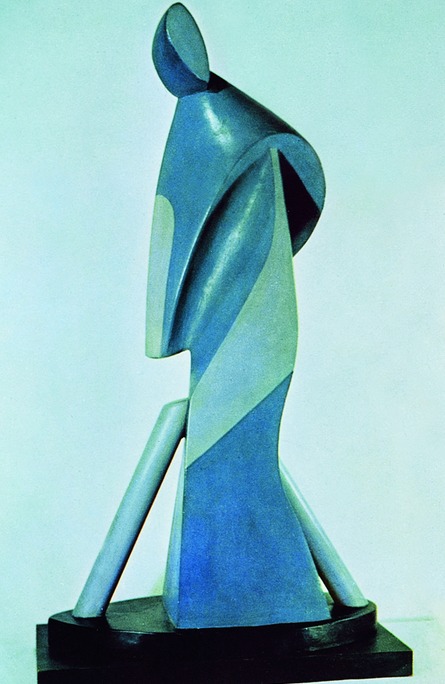
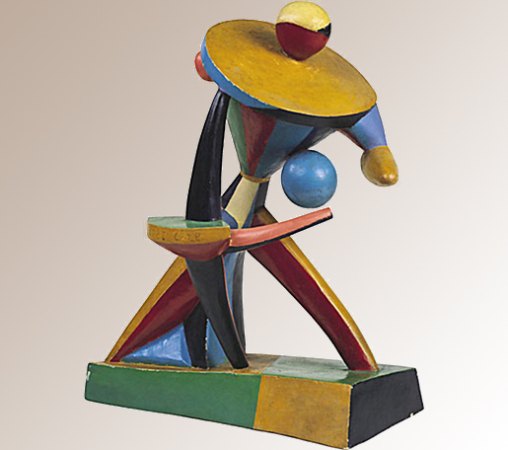
In 1920, Archipenko became the first Ukrainian who took part in the Venice Biennale. The sculpture of the gondolier was created for the Biennale. It was exhibited in the pavilion, which was created before the revolution thanks to Bohdan Khanenko.
The sculpture «Gondolier» is quite symbolic precisely in the context of the Venice Festival, because gondoliers are an undeniable symbol of the city. However, the sculpture was subjected to severe criticism.
Archipenko opened his school in Berlin, but the economic crisis of interwar Europe pushed the artist to move to the USA. The American market was larger and more progressive than the conservative European one. The works of European artists sold better overseas than in Europe itself. This became one of the reasons for moving to the USA a large number of outstanding European artists. And also, the absence of wars that tore apart Europe in the first half of the 20th century.
In the US, Archipenko invented a kind of moving pictures and received a patent for his invention (he gave it the name – Archipentura). Now billboards work according to this principle, where the image changes strip by strip. 20 years ago, they were in Kyiv at every step.
Oleksandr Archipenko closely cooperates with the Ukrainian community in the USA. The sculptor participated in the creation of monuments to Taras Shevchenko, Ivan Franko, and Volodymyr the Great.
In 1934, the Ukrainian diaspora presented Lviv with a sculpture by Archipenko, but the Soviet authorities destroyed it in 1952 along with other «formalist» works by Ukrainian artists.
The American collector and researcher of Archipenko, Donald Karshan, noted: «In less than 7 years, he (Archipenko) introduced more radical changes in sculpture than had been made in several centuries».
Archipenko’s sculptures can be seen at the Metropolitan, the Solomon Guggenheim Museum, the Center Pompidou, the Tate Gallery and others. The prices of his sculptures at auctions reach millions of dollars. In Ukraine, the sculptor’s name was banned until the end of the 1980`s.
In the first decades of independence, interest in Ukrainian art was not as powerful as it would have been. This is due to the difficult economic situation in Ukraine, the large amount of destroyed and stolen Ukrainian heritage. And also, dominance of Russian cultural content. But now is the time to change priorities, abandon old narratives and learn own real history and culture.
You can learn more about Ukrainian and European art at the «Lihtaryk» art studio on courses on the history of Ukrainian art and the history of European art. At the master classes in painting and decorative and applied crafts, such as pottery, Vybiyka (stamp pressing technique), Motanka-doll, Petrykivka or Samchykivka, you can experience Ukrainian art and try to recreate it with your own hands. Also you can buy a gift certificate for all creative master classes and art lectures. .

У меня синдром Стендаля сегодня. Утром ходили в Падуанский баптистерий. Смотрели фрески Менабуя. А после обеда у нас было посещение каппелы Скровеньи. Теперь я понимаю , что сделал Джотто для мира. Очень меня все это впечатлило в живую. Привет передала. Мир прекрасен. Падуя очень понравилась:) спасибо за лекции Света!
Lily Golovchak
Our location


