
When the Old Masters created paintings, they did not even have an idea of what style their works would be classified by art historians. But the artists of the new time, and especially the painters who worked at the end of the 19th and in the 20th century, were very concerned with the classification of their works. Moreover, they created new directions themselves. Thus, Georges Braque (1882 – 1963) and Pablo Picasso (1881 – 1973) created Cubism, Kazimir Malevich (1879 – 1935) – Suprematism. Let’s understand together the main «-isms» of modern art.
Impressionism. It is certain that this painting direction is the most popular and recognizable. The name itself is translated from French as «impression». Now we have a pleasant impression of Impressionism, but when the artists opened their first exhibition, they received only sarcasm and criticism in their direction. The peculiarity of the impressionist style is that, for the first time in the history of painting, paintings were completely painted on plein air. In addition, the Impressionists did not mix the colors on the palette, but applied them to the canvas with separate thick strokes in the expectation that all the colors would mix already in the eye of the viewer. That is why Impressionist paintings should be viewed from a distance.
The most prominent representatives: Oscar-Claude Monet (1840 – 1926), Edouard Manet (1832 – 1883), Edgar Degas (1834 – 1917), Pierre-Auguste Renoir (1841 – 1919).
An interesting fact is that the impressionists did not plan to create their artistic direction. They only sought to move away from academicism, give painting a fresh breath and bring it closer to reality. After all, academism stood on the basis of the fact that the greatest things have already been created by the artists of past generations and it is necessary to imitate them and paint pictures on mythological, religious and historical subjects.
Impressionist artists were not admired either by the Academy of Arts, or by the organizers of the Salons (the main exhibitions of paintings of the 19th century), or by ordinary viewers. They opened their own «Exhibition of the Rejects» thanks to Napoleon III, who did not like the principle of selecting paintings for the official Salon.
The name Impressionism was given by Claude Monet’s painting «Impression, Sunrise». Art critics took this name as a basis to thoroughly criticize not only this artwork, but also other paintings in the exhibition.
In the artworks of the Impressionists, you can see many borrowings from Japanese engraving. Edgar Degas brought features of Japanese perspective and figure construction to his paintings. Thus, Japanese engraving had a great influence on the formation of impressionism and post-impressionism, although this is not obvious at first glance. With the help of the reduced perspective of impressionism in the 19th century in France it was possible to combine European and Japanese culture. It is still highly valued by the Japanese. Such influences are not often given much attention in the literature about Impressionism. To understand more deeply, it is worth looking for English-language sources.
One of the first to appreciate the work of the artists of the new direction was the art dealer Paul Durand-Ruel (1831 – 1922). He bought paintings from then-unknown artists, organized their exhibitions and promoted them in every way on the art market. But a real revolution in the art market was made by Ambroise Vollard (1866 – 1939), who was able to make a considerable fortune by buying and selling Impressionist paintings. His book «Recollections of a Picture Dealer» tells many interesting stories about the life and work of outstanding artists.
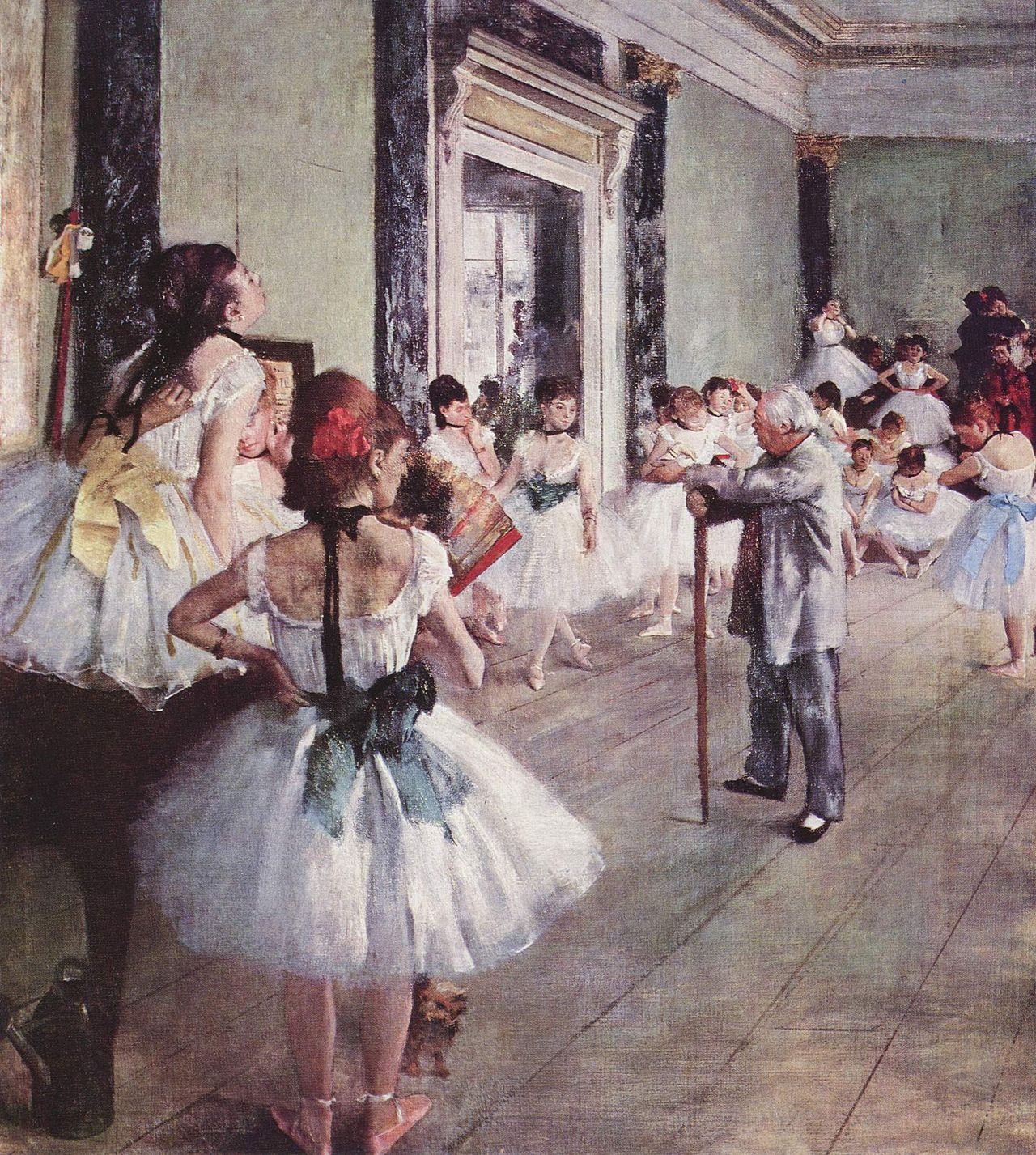
Post-impressionism. The art movement that followed impressionism. For representatives of this direction, it was important not only to convey visual effects, as their predecessors did, they resorted to significant stylization of their painting. Post-impressionism is characterized by a variety of creative solutions and technical methods.
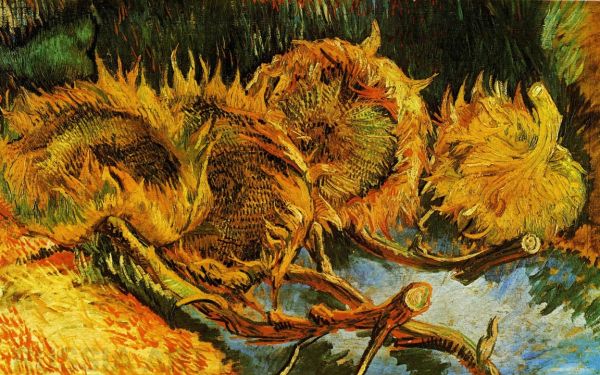
Van Gogh’s works preceded the appearance of expressionism. His works with rich, contrasting colors influenced the next generation of artists. Although Van Gogh (1853 – 1890) was not successful during his lifetime. He was able to sell only one painting and lived on a small amount of money that were sent to him by his brother Theo. Vincent’s correspondence with his brother Theo is a must-read for understanding not only Van Gogh’s work, but also the context in which he worked.
A kind of antipode of Van Gogh was Paul Gauguin (1848 – 1903). Vincent greatly appreciated Paul and listened to his opinion, a series of paintings «Sunflowers» were painted for him. Van Gogh and Gauguin wanted to create a painting commune in Arles, where artists could live without worrying about their earnings. However, the idea was not implemented. Contemporaries considered Gauguin self-taught and did not take him seriously. Subsequently, Gauguin’s works influenced the emergence of symbolism and modernism.
Henri Matisse (1869 – 1954) was the founder of Fauvism. The bright colors and dynamics of his paintings impressed artists of subsequent generations. Matisse admired the decorativeness of painting. In his later works, he came as close as possible to abstract art. Matisse loved to teach painting, even created his own Academy.
Paul Cézanne (1839 – 1906) had a huge influence on the art of the 20th century. It was he who became the father of cubism. Ambroise Vollard organized a major exhibition of Cézanne, already in the last years of the master’s life. This exhibition showed Paris what a titan lives and works nearby. Cézanne himself did not expect such recognition and interest in his paintings after the exhibition.
Cézanne tried to create a new great style. His creative pursuits based on deep knowledge of Renaissance painting and the Dutch Golden Age painting. The artist sought to achieve maximum expressiveness with a minimum set of materials. His search led to the fact, that in his paintings it is possible to find many opportunities for the development of modern artists.
Cubism. The art movement, the meaning of which is based in its name: the transformation of all living and lifeless objects on the canvas into geometric figures. Artists of the 20th century tried to move away from a realistic image, to transform the forms familiar to us in every possible way. The most famous cubist painting is «Guernica» (1937) by Pablo Picasso, which shows all the horrors of modern war, when an entire city was destroyed in one night, as happened to the Basque city of the same name.
Picasso believed that cubism should become an art that shows the world not as the artist sees it, but as he thinks it is. Cubism became a kind of philosophy of painting, which tried to show the true essence of things, and not their realistic image. However, Cubism could not compete with abstract art and was not a lasting landmark in the art world of Europe.
The titanic «Guernica» by Picasso (3.49 x 7.76 m) remained the most significant work in this direction. Even close friends did not understand his idea. But probably no other direction of painting could better convey on canvas the life of the city, which was shattered into pieces by an unexpected aerial bombardment of the civilian population.
Representatives: Georges Braque (1882 – 1963), Pablo Picasso (1881 – 1973).
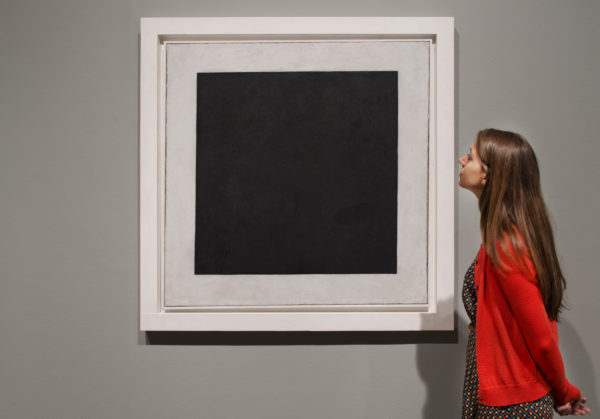
Suprematism. The concept of Suprematism is based on the objectlessness of painting, a complete departure from the image of the material world. According to the artist, all efforts should be focused on color, shape, texture, movement. The huge influence of Suprematism, in particular the studies of Kazimir Malevich (1879 – 1935), is felt in modern design and graphics. Actually, it was Malevich who developed the philosophy of Suprematism and wrote the manifesto for the new painting. The main idea is the break between painting and the real world.
In his developments, Malevich moved back the achievements of Cubism and Futurism. The artist tried to translate painting into a plane of exclusively color and lines that form geometric shapes. He experiments with dynamics and statics, movement and immobility. His «Black Square» (1915) and «White on White» (1918) are two of the most vivid examples of work with contrast and static, monochrome and movement.
Representatives: Kazimir Malevich (1879 – 1935), Oleksandra Ekster (1882 – 1949).
Surrealism. The concept of Surrealism is based on the psychological research of Sigmund Freud (1856 – 1939). Artists study and depict the subconscious on canvas. In order to escape from reality, artists even get acquainted with the drawings of schizophrenic patients.
If the philosophical basis for surrealism was provided by the teaching of Freud, then the technical elements of expression were taken from the Dadaists. The French Dadaists used their art to show the absurdity of human life and the existence of the universe in general. This was quite clear in the context of the world wars of the first half of the 20th century.
Surrealism gained popularity not only in painting, but also in cinema and photography. Surrealist paintings we can divide into two directions types: more abstract as in Joan Miró (1893 – 1983) and visually realistic as in René Magritte (1898 – 1967).
Salvador Dali (1904 – 1989) worked in Hollywood. Later, in his work with Hollywood, he thought on a large scale, without looking back at the budget. And it was not uncommon when his idea was edited, taking into account the financial possibilities of the film. Then he got terribly angry and demanded to implement everything planned. Then Dali began to collaborate with Alfred Hitchcock (1899 – 1980) to create creepy mystical scenes in the film «Bewitched». However, the implementation of the ideas was low-budget (instead of real grand pianos, small copies were tied to the ceiling). Then it got annoying and he got the scene to be completely reshot. After the triumph of the film, Dalí became his own man in the Hollywood hills.
Cooperation with Disney ended after the death of both creators of the animation. After all, the Second World War acutely raised the financial aspects. Disney was not sure of the commercial success of «Destino» and postponed the project, which was released only in 2003.
René Magritte depicted the world in a surprisingly realistic way, and only the essence of the image tells us that it is not impossible for what is depicted to exist in reality. Magritte confuses his viewer, makes him think about what is in front of his eyes.
Frida Kahlo (1907 – 1954) had her reasons for joining surrealism. Her paintings are deeply personal, they read like an autobiographical book. The accident that broke young Frida’s spine forever changed her life. It is this vision of herself, broken physically and not broken in spirit, that Frida transfers to her surrealistic paintings. Seasoning this story with traditional Mexican flavor and local culture. All this makes Frida Kahlo’s paintings recognizable at first glance.
Representatives: Salvador Dali (1904 – 1989), Rene Magritte (1898 – 1967), Andre Breton (1896 – 1966), Frida Kahlo (1907 – 1954).
You can learn more about the most famous art movements and the history of art at the «Lihtaryk» art studio. Moreover, while visiting Kyiv you can find one more interesting place where to go in Kyiv.
You can also order a gift certificate or an online master class in our studio.
У меня синдром Стендаля сегодня. Утром ходили в Падуанский баптистерий. Смотрели фрески Менабуя. А после обеда у нас было посещение каппелы Скровеньи. Теперь я понимаю , что сделал Джотто для мира. Очень меня все это впечатлило в живую. Привет передала. Мир прекрасен. Падуя очень понравилась:) спасибо за лекции Света!
Lily Golovchak
Our location


