
Oleksandra Ekster (Alexandra Exter) (1882 – 1949) is one of the brightest artists in the history of Ukrainian fine art. The main part of her creative life is connected with Ukraine, particularly with Kyiv. The Ukrainian flavor is vividly traced in her works.
Attempts to call her a Russian and Soviet artist are the height of cynicism, because it was precisely because of the Soviet, villainous regime that she was forced to leave her native home in Ukraine and go to Paris, where she already had contacts and previously worked on productions in the theater. Right now, millions of Ukrainian women have a clear awareness that such forced emigration is not what a person dreams of. But let’s get to know this incredibly charismatic and talented woman in more detail.
Oleksandra Ekster is a representative of cubism and futurism, a woman who made a revolution in scenography, as well as a talented art teacher. Her artistic development took place in Kyiv, where Oleksandra created her art school, which began as a search for means of livelihood, and became a cult place for a new generation of artists.
Oleksandra was born on January 6 in the city of Bialystok (now Poland). Her father was Belarusian with Jewish roots, her mother was Greek. When the girl was two years old, the family moved to Smila (center part of Ukraine), and later to Kyiv. Oleksandra received her secondary education at the St. Olga Girls’ Gymnasium in Kyiv, later she received an art education at the Kyiv Art School together with Oleksandr Archipenko (a world famous sculptor).
Among her teachers were Mykola Pymonenko and Serhiy Svitoslavskyi. She went to Svitoslavskyi to study at his estate on the Kyrylivska str. 96 in Kyiv (the building has not been preserved), where the artist arranged so-called “Saturdays” for young artists. Here it is worth noting that Pymonenko and Svitoslavskyi were realist artists. However, they were able to influence a whole generation of avant-garde artists.
Later, she went to study in Paris. There she attended two academies at once: The Académie Julian, known for its strict discipline and academic approach (another Ukrainian artist, Maria Bashkirtseva, also known as Marie Bashkirtseff, also studied there) and the Académie de la Grande Chaumière, an art school with the newest approach. There she met Guillaume Apollinaire, Pablo Picasso and Henri Matisse.
Under the influence of Henri Matisse Fauvism, Oleksandra Ekster painted «Three Female Figures» (1910)
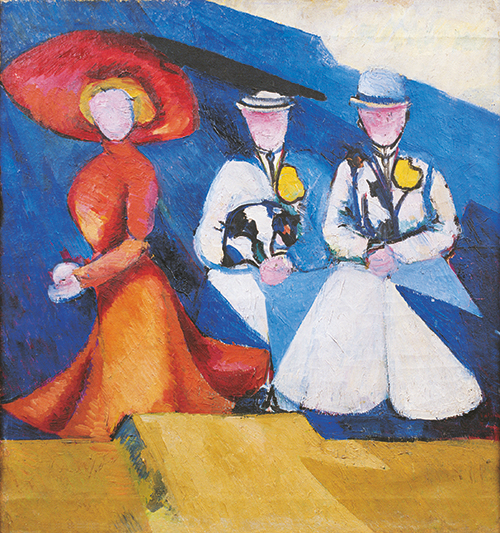
Oleksandra and her two friends Evgenia Prybylska and Nataliya Davydova are depicted here. All three women are conventionally depicted, their faces are not written. However, they are all dressed tastefully and according to the fashion of the time: white and red coats, high men’s collars, narrow ties, hats (Ekster herself has a red one with large brims and her friends have bowler hats).
Exter spent every summer in the village of Skobtsi (now Veselynivka) of the Baryshivskyi district with Evgenia Prybylska and in the village of Verbivka of the Cherkasy region with Natalia Davydova.
In 1900, Davydova set up an embroidery workshop in Verbivka, the main purpose of which was the revival and preservation of folk Ukrainian art techniques. Four years later, Ekster joined the workshop. Thanks to her, craftswomen began not just to copy old embroidery patterns, but to use them to decorate belts, bags and pillows.
Thanks to Ekster, other avant-garde artists joined the workshop, among whom Kazimir Malevich (just one of many artists stolen from Ukraine by the empire) occupies a prominent place. Together with other artists, he developed sketches, according to which embroiderers already made their embroideries.
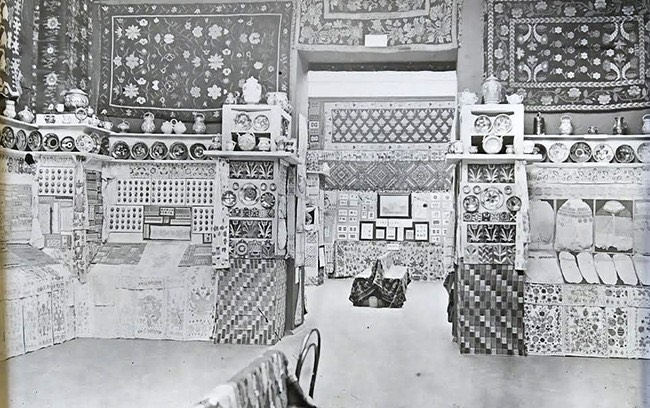
Ekster was very familiar with Ukrainian decorative and applied arts, the color of embroidery and Vybiyka (stamp pressing technique), house paintings and Hutsul carpets. In Kyiv, she was a co-organizer of the «Applied Art and Handcrafts» exhibition at the Kyiv Art and Industry Museum (now NAMU – National Art Museum of Ukraine). The first director of the museum was Mykola Biliashivskyi, whose book «Ukrainian Folk Art» was first published in Ukrainian only in 2022.
Oleksandra Ekster was the curator of the department of decorative and applied arts. She was engaged in organization in the space of ceramics, embroidery and carpet making. Black and white photographs have been preserved.
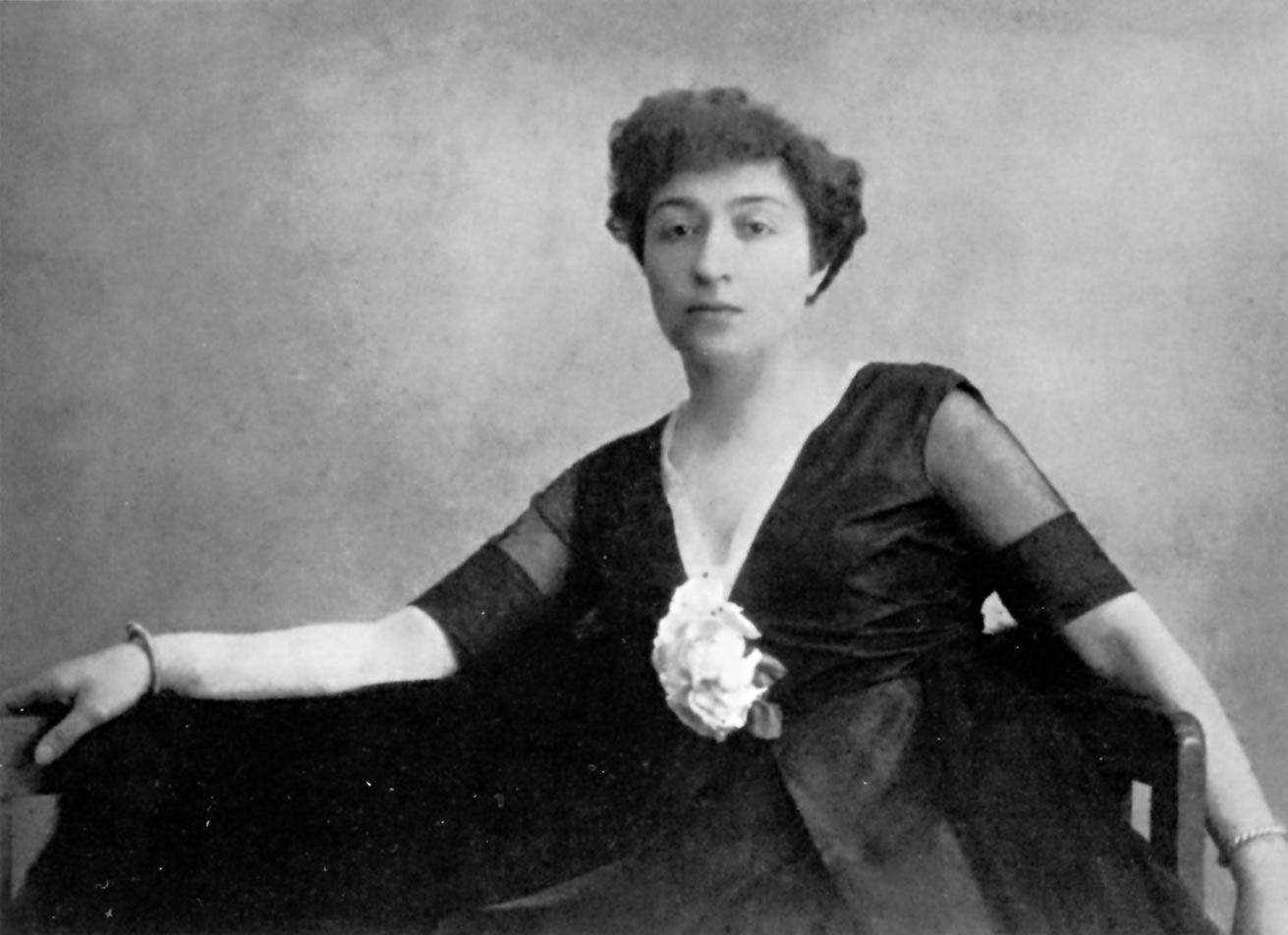
In 1908, Ekster, together with David Burliuk and other artists, organized the exhibition «Lanka», which is considered the beginning of the Ukrainian avant-garde. Oleksandra acted not only as an artist, but also as an organizer and curator of the exhibition. It was she who agreed with the city administration on the lease of premises on Khreshchatyk, organized the sale of tickets and organized the exhibition space.
In 1909-1911, Oleksandra lived and worked between Kyiv and Paris. In Paris and London, together with her friend Davydova, she organized exhibitions of the Kyiv Crafts Society (which existed from 1906 to 1917) to popularize Ukrainian folk art.
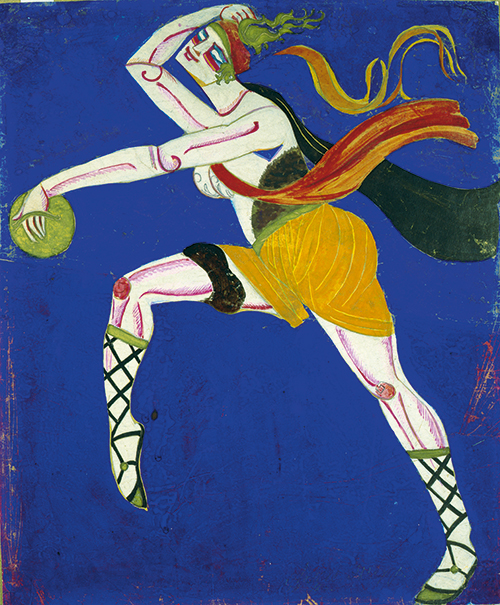
The main field of interest of Oleksandra Ekster was scenography. In scenography, she replaced flat painted scenery with voluminous, multi-tiered, moving structures. And she designed theatrical costumes harmoniously in color with the scenery. In addition, Ekster offered to paint the faces of the actors.
An excellent example of her theatrical works is the play «Famira Kifared» (1916)
On January 9, 1918, the Central Rada proclaimed the independence of Ukraine, and on January 26, Muravyov’s gangs broke into the city. In the same year, Ekster opened his school right in his home workshop. She needed the money from her studies for banal survival. However, the quality of teaching was at the highest level. Beautiful artists came out of her workshop, who preserved her style in their works. Oleksandra took students with an academic background and taught them modern avant-garde art.
After the arrival of Soviet troops in Kyiv, Oleksandra Ekster was forced to go first to Odessa, and then to her beloved Paris, where she lived the rest of her life. In Paris, she taught at the Academy of Contemporary Art in Paris at the invitation of Fernand Léger.
It was only in 2008 that the first retrospective Ekster exhibition was held in Ukraine.
You can learn more about Ukrainian artists by attending art lectures and master classes of the «Lihtaryk» art studio. Order gift certificates and find another interesting place where to go in Kyiv.
У меня синдром Стендаля сегодня. Утром ходили в Падуанский баптистерий. Смотрели фрески Менабуя. А после обеда у нас было посещение каппелы Скровеньи. Теперь я понимаю , что сделал Джотто для мира. Очень меня все это впечатлило в живую. Привет передала. Мир прекрасен. Падуя очень понравилась:) спасибо за лекции Света!
Lily Golovchak
Our location


