
1. Kazimir Malevich is a Ukrainian artist. Yes, you didn’t think so. Malevich is a Ukrainian artist of Polish origin, born in Kyiv and deeply immersed in Ukrainian folk art, which had a significant influence on his avant-garde work.
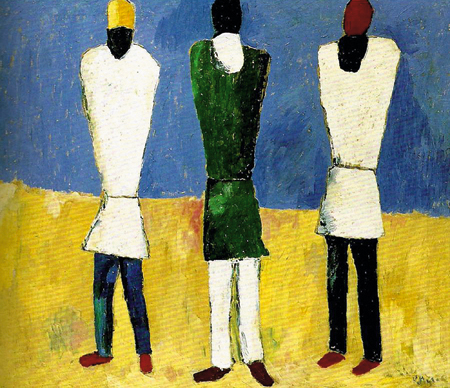
Kazimyr Severinovich Malevich (1879 – 1935) is just one of the artists stolen from Ukraine by the empire. The particular cynicism of the empire is that, appropriating the artist’s creative work, it destroys his life, often destroying the artist physically. This happened more than once in the history of Ukraine. We even have the term «shot Renaissance», but that’s a topic for another article. Here we will consider the work of one of the most famous avant-garde artists in the history – Kazimir Severinovich Malevich.
Let’s start with geography. The future artist was born in Kyiv. The father was an engineer and the family traveled to different cities, depending on where the father worked. Thus, until he came of age, young Kazimir managed to live in Podillya, Kharkiv Oblast and Chernihiv Oblast. He studied drawing again in Kyiv, at the Kyiv Art School with Mykola Pymonenko (one of the best artists of his time, whose paintings were bought by the Louvre during his lifetime).
In 1904, he moved to Moscow, where he continued his studies. Here it is worth noting that the first art academy in Kyiv was opened only in 1917, before that all artists were forced to go to the imperial center. In 1927, Malevich returned to Kyiv, where he worked, including at the Academy of Arts, published his art articles in the Kharkiv magazine «Nova Generatsiia». During his work at the Academy of Arts (the Kyiv Art Institute at the time), he collaborated with a pantheon of Ukrainian artists, including Fedir Krychevsky (died at his easel from hunger), Mykhailo Boychuk (he was shot), Oleksandr Bohomazov, Viktor Palmov, Vadym Meller. When the repressions against Ukrainian artists began, Malevich returned to St. Petersburg. Then he was going to emigrate to Western Europe. In the autumn of 1930, during an interrogation by the NKVD, he indicated his nationality: Ukrainian and Pole. He will be imprisoned on fabricated charges, like many other Ukrainian artists in the 1930s.
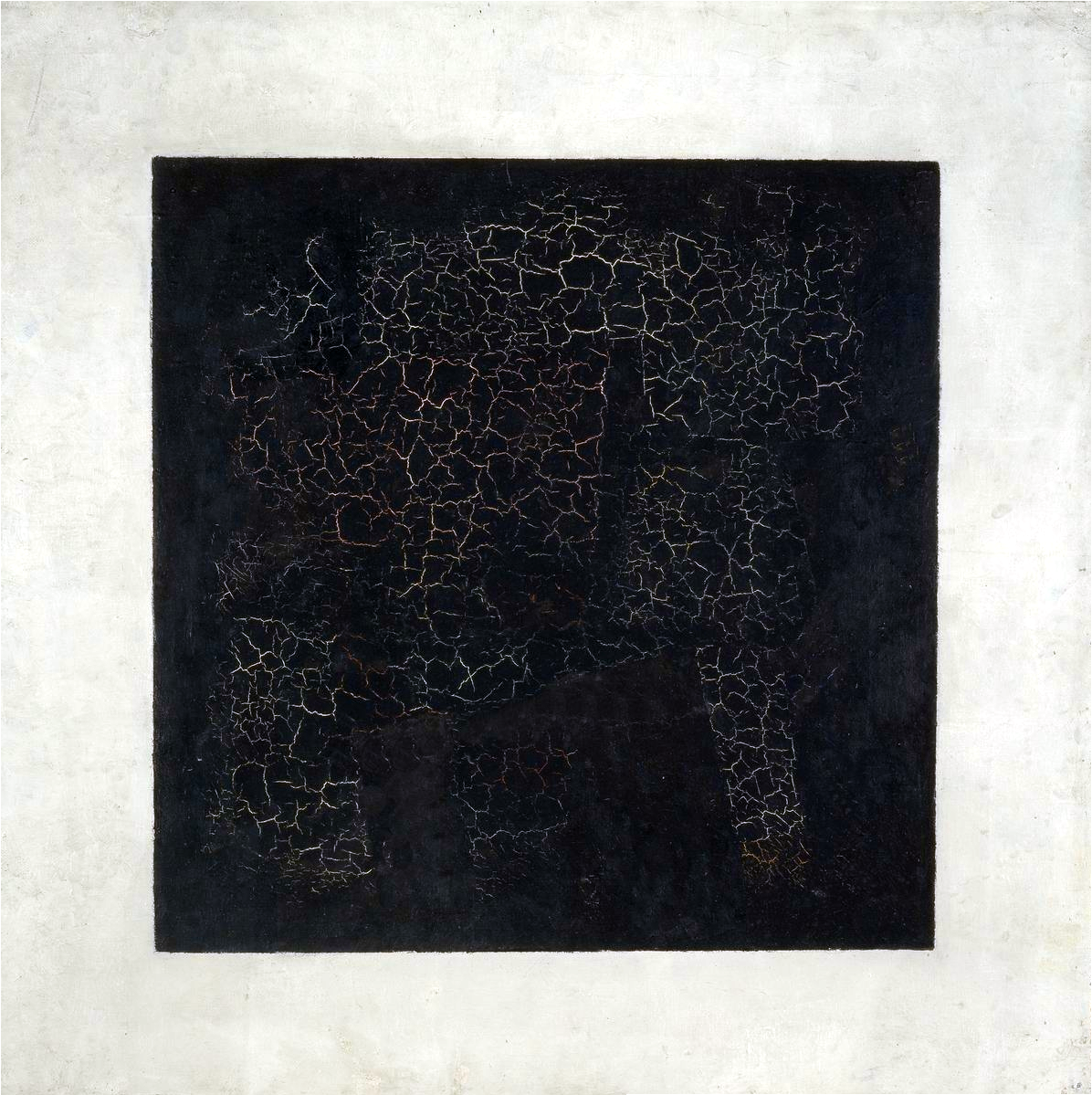
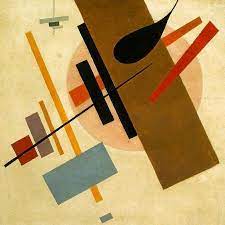
2. Kazimir Malevich is one of the most famous avant-garde artists in the world, the founder of Suprematism, one of the fathers of Cubofuturism, and a well-known art theorist. The basis of Suprematism was the final break with the image of the real world. To be fair, it must be said that this trend was not initiated by Malevich. Refusal to depict the real world was a Pan-European trend. We can say that it all started with the impressionists and the search for a new pictorial language by Paul Cézanne. It is precisely Malevich’s «Black Square», which the author hung in the corner, where icons were traditionally hung, that became a kind of manifesto and crystallization of a new stage in the history of painting. Malevich claimed that artists should focus all their efforts on color, texture, form and movement. In one of his manifestos, Kazimir Malevich wrote: «Only with disappearance of a habit of mind which sees in pictures corners of nature, Madonnas and shameless Venuses in paintings, only then shall we witness a work of pure, living art».
3. Kazimir Malevich collaborated with embroiderers in the workshop at Natalia Davydova’s estate in Verbivka (the modern territory of Cherkasy region, at the invitation of Oleksandra Ekster. He, together with other avant-garde artists, developed suprematist and avant-garde sketches, according to which the embroiderers were already making embroideries. According to Malevich’s sketches, not only towels, but also pillows and scarves. The main idea of Oleksandra Ekster, who was the inspiration for such a combination of craft with Suprematism, was to create objects that can become part of the interior or wardrobe of her contemporaries.
In 1915, embroideries and carpets based on the sketches of avant-garde artists were presented at an exhibition in the Lemercier Gallery in Moscow.
4. «Black Square» (1915) is not the first painting of this kind, but it was the one that had a stunning effect. Malevich considered the «Black Square» to be an ideal form. One of the first sketches of the future masterpiece appeared in 1913 while working on the scenery of Mikhail Matyushin’s futuristic Performance-Opera «Victory over the Sun». Malevich must have heard about Alphonse Allais’s work with the non-politically correct name of the painting «Battle of the Negroes in Deep Cave Dark Night». But unlike Allais and other artists who developed the theme of monochrome geometric figures, Malevich did not try to give his square any plot. It’s just the perfect start, the perfect color and the perfect shape.
5. Kazimir Malevich, shamelessly appropriated by the Soviet empire after initially banning his work, was often presented as a revolutionary artist. There was a similar scheme in relation to Lesya Ukrainka. This proven scheme of banning some works and ideologically highlighting others worked successfully throughout the entire existence of the USSR. But it is worth noting that Malevich was one of the few artists who covered the theme of the Holodomor in his work «Where the hammer and sickle are, there are death and famine».
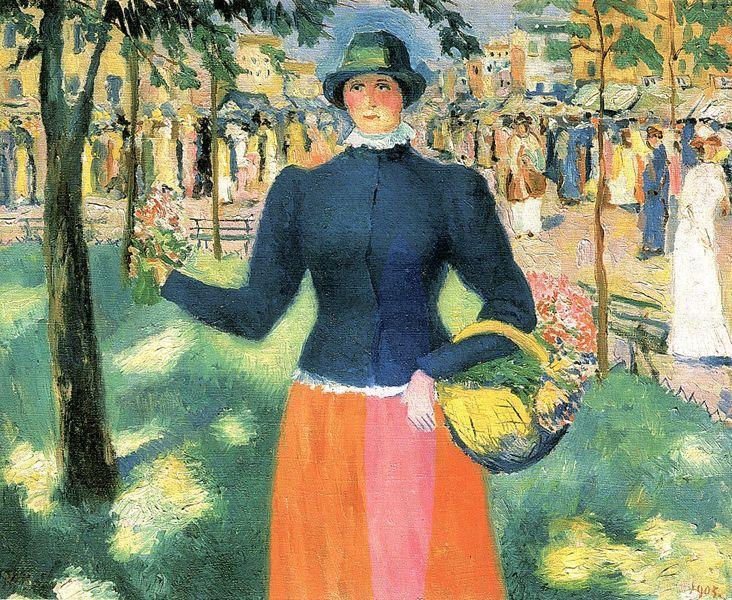
6. The most famous avant-garde artist Malevich considered the best Ukrainian realist Mykola Pymonenko to be his main teacher. Pymonenko painted about Ukraine and Ukrainians, depicted Ukrainian traditions and was successful far beyond the borders of Ukraine and the Russian Empire. In memory of his teacher, Malevich wrote a bright work «The Flower girl», which echoes the painting of the same name by Pymonenko. Both paintings depict Kyiv florists, only the styles of the paintings are significantly different.
7. World recognition and its realization by the artist himself came in 1927 during exhibitions in Munich, Berlin and Warsaw. He realized there that his ideas are popular, they are taught in the best art universities. But the KGB was not satisfied with such popularity of the artist and he was forced to urgently return to Leningrad. In the Soviet Union, he was accused of formalism, of unwillingness to depict socialist reality. After all, socialist realism was the only permitted form of work for artists. Like other innovative artists in the 1930s, Malevich was arrested on suspicion of espionage and formalism.
8. Malevich actively collaborated with other artists. He participated in various artistic organizations. One such association was called the «Society of Heads of the Earth». Avant-garde and extraordinariness were an integral part of the artist’s life not only in art.
9. Kazimir Malevich left behind not only paintings, but also a rather large written legacy. These are both his manifestos and theoretical works devoted to the study of color and form in painting. In addition, his lectures, which he gave to students over the years, and his theoretical justifications for Suprematism were published.
10. Malevich was buried in a cross-shaped coffin. However, during World War II, the artist’s grave was destroyed, and the burial place was forgotten. Only later, thanks to activists, his grave was found on the site of a collective farm field.
You can learn more about Kazimir Malevich and the Ukrainian avant-garde at the history of Ukrainian art lectures at the Lihtaryk art studio. Lectures can be ordered online and offline, also you can purchase a gift certificate. And you can find one more place where to go in Kyiv at the «Lihtaryk» art studio, where you can feel like an avant-garde artist and paint your own suprematist composition at oil painting master classes.

У меня синдром Стендаля сегодня. Утром ходили в Падуанский баптистерий. Смотрели фрески Менабуя. А после обеда у нас было посещение каппелы Скровеньи. Теперь я понимаю , что сделал Джотто для мира. Очень меня все это впечатлило в живую. Привет передала. Мир прекрасен. Падуя очень понравилась:) спасибо за лекции Света!
Lily Golovchak
Our location


