
Claude Monet is one of the most famous artists in the world and probably the most famous impressionist. His works are associated with light and beauty. But his last series of paintings, which depict lilies, really had a deeper meaning. But more about you will learn at the end of the article.
Claude Monet is a rare case of an artist who went from unknown to incredibly popular and very rich artist during his lifetime. So, let’s start from the beginning.
Claude Monet lived a long 86-year-old life. He was born in Paris, but as a child he moved with his parents to Normandy, namely the city of Le Havre. It should not be surprising that his father was against his son’s art career, but wanted to give him a «normal» profession. That was, for Claude, to continue the family business and become a grocer. But Claude stubbornly wanted to paint. It should be noted that Norman nature with its picturesqueness also inspired him. So, on the coast of Normandy, Monet met the landscape painter Eugène Boudin, who is considered the forerunner of Impressionism. The famous artist showed Monet some principles of working from nature.
Studying at the Faculty of Arts disappointed young Monet and he dropped out. After that, he went to study in Charles Gleyre’s studio, where he met like-minded people Auguste Rodin and Frédéric Basille.
In 1870, the artist went to Great Britain, where he got acquainted with the paintings of William Turner (we have a separate article about him on our website). The works of British artists, mainly Turner, had a significant impact on the formation of future impressionism.
And after 2 years, in 1872, Monet wrote one of the most famous landscapes in history – «Impression. Sunrise», which will give the name to the artistic direction in art – «impressionism».
Claude Monet studied light. This was his main hobby. The artist was interested not so much in the object itself, but in how it looks depending on the lighting. Yes, Monet came to Rouen several times to paint the local Gothic cathedral. The first trip was to visit brother Leon. In the Rouen Cathedral, the artist was interested in how the light reflected from the facade of the cathedral, which had a rich decoration, like other Gothic cathedrals. While working on this series of paintings, Monet bought land in Giverny, where his house and garden would later appear. Monet said that if he had not become an artist, he would have become a gardener. Plants were his second passion.
The Rouen Cathedral series took the artist three years from 1892 to 1895. It consists of 35 paintings. Of which 28 images of the cathedral (the most famous paintings of the series), 4 general plans, 3 views of Alban’s courtyard, which is located next to the cathedral.
Even 20 years before that, Monet had created a series of «Station Saint-Lazare» of 12 paintings. It can be assumed that this idea came to him after viewing Turner’s paintings in London, because the outstanding Englishman painted pictures with trains, conveying the incredible speed of the new type of transport. Monet, before he took up the subject of Saint-Lazare, had also written stations. However, this was his first large series, where the artist explored exactly the effect of light on the object. Subsequently, this will become his main research in creativity.
It should be noted that the first experience did not lead to a wave of popularity. In general, his paintings were sharply criticized, calling them «smear». But in a few decades, Monet not only received recognition, but also managed to sell his paintings at a high enough price to maintain his large estate and garden in Giverny. It was there where collectors and dealers from all over the world, from Japan to the USA, came to the artist to see and buy his works.
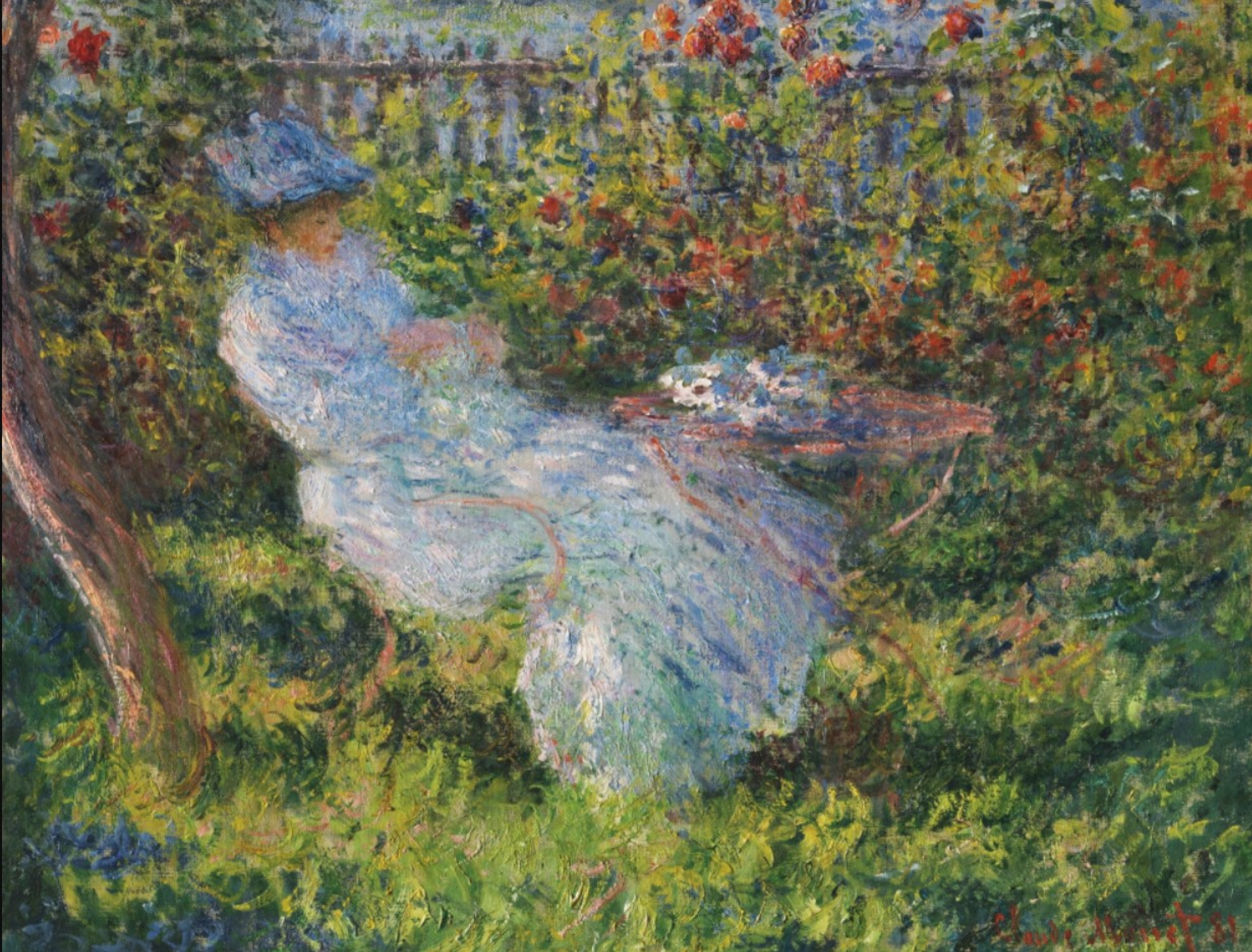
In addition to his passion for painting and gardening, Monet was a great gourmet. There were legends about his dinners. In his house you could meet a wide variety of interesting people of that time. One of the most anticipated guests was «The Tiger», as Georges Clemenceau was called.
Georges Clemenceau – the prime minister of France and the «father of victory», as the military called him, was a good friend of Claude Monet. It is interesting to note that Clemenceau was almost the only politician in post-war Europe who warned against German revanchism. Clemenceau said that the threat of World War II loomed over Europe and his appeals were not taken seriously at the time.
Claude Monet’s last series of paintings – «Grande Decoration» – became his largest project.
It should be noted that the impressionists did not make large-scale wall paintings. They became famous for their chamber works, which they wrote in plein air. However, as Théodore Géricault said: «True painting is tons of paint on multi-meter canvases», and this thesis probably did not give Monet peace.
France was at war with Germany. The entire French press wrote that it was a war of civilization against the barbaric invasion of the Huns. And while the Germans were destroying the cultural heritage of France, modern artists took their position in glorifying the Motherland.
In 1915, the artist first showed his magnificent paintings with lilies and willows in Giverny. And in 1918, the length of the composition was already more than 30 meters. But the artist faced another shortage caused by the war: a shortage of paint.
At the front, the military decided to make camouflage using 135,000 m2 canvases with a painted landscape to hide the trenches and supply line.
In 1917, Monet had to go to Reims to paint a series of pictures of the destruction of the main cathedral of France. In the cathedral of the 12th century where six kings and queens were crowned. But, instead of this cycle, he worked on « Les Grandes Decoration».
Claude Monet planned to make a monumental canvas approximately 20 meters long, which was to be exhibited in a large round room.
In 1920, the artist announced a great gift to France – 12 decorative paintings. Monet worked for a long time on a cycle of paintings dedicated to the memory of the First World War, which depicted lilies from the artist’s garden, overcoming his age and cataracts. The struggle with cataracts was very difficult, and the disease itself stole the most valuable thing from the artist – his vision.
Monet’s love for lilies dates back to 1889. It was then that he first saw the unusual water lily hybrids of the French lawyer and gardener Joseph Bory Latour-Marliac at the World Exhibition in Paris. These hybrids were first adapted to life in the European climate. As early as 1894, the first lilies appeared in Monet`s Lake in Giverny.
Georges Clemenceau found a place to exhibit «Grandes Decoration» – the Orangery Museum. Clemenceau was very saddened by the fact that, after the artist’s death, the public’s interest in the exhibition in the Orangery and Monet’s works in general was insignificant.
The revival of interest in Monet and his last cycle of paintings came from an unexpected place – from representatives of abstract impressionism in America. It was the large paintings from the Orangery that they recognized as the origins of their art. Monet began to be perceived as the father of the abstract painting. The irony is that Monet was skeptical of Americans and did not want to sell his paintings to them during his lifetime.
You can learn more about Claude Monet, the Impressionists and European art at lectures from the «Lihtaryk» art studio, and at oil painting master classes you can paint a reproduction of Monet’s paintings. Come to our cozy art studio and immerse yourself in the world of creativity.
У меня синдром Стендаля сегодня. Утром ходили в Падуанский баптистерий. Смотрели фрески Менабуя. А после обеда у нас было посещение каппелы Скровеньи. Теперь я понимаю , что сделал Джотто для мира. Очень меня все это впечатлило в живую. Привет передала. Мир прекрасен. Падуя очень понравилась:) спасибо за лекции Света!
Lily Golovchak
Our location


