
The theme of women in art has not been explored for many years. And this situation was not only in Ukraine, but also in other countries. Only with the spread of feminism and the appearance of female researchers, the first books about female artists appeared. But the Ukrainian context is also complicated by the fact that Ukrainian women artists either had to emigrate from their homeland or their inheritance was stolen by Russian art critics (for the sake of justice, it should be noted that they also stole the inheritance of male artists). In recent years, through the efforts of young Ukrainian art critics, leading museums such as the Metropolitan Museum of Art have begun to change the attribution of prominent ukrainian artists and label Repin, Aivazovsky and Kuindzhi as Ukrainian artists. Recently, the main art museum of Finland – Ateneum, whose collection history began with paintings donated by Repin, changed the attribution of the artist from «Russian artist» to «Ukrainian artist».
It is time to return the Ukrainian female artists who were stolen by Russia (Marie Bashkirtseff, Oleksandra Ekster) and to clearly indicate the Ukrainian origin of female artists who were fully realized abroad (Sonia Delaunay, Lenore «Lee» Krasner, Louise Nevelson) and to actively promote in the world entirely Ukrainian artists (Sophia Levytska, Maria Prymachenko, Kateryna Bilokur) and artists who consciously chose to be Ukrainian artists despite having a different nationality (Sofiya Nalepynska-Boychuk, Alla Horska).
Sonia Delaunay (1885 – 1979) is a world-famous artist of Jewish origin from Ukraine. Sonia was born in Poltava region, her birth name – Sara Stern. The girl’s early childhood was spent in the south of Ukraine in Odesa and, unfortunately, her parents died early and she was adopted by her uncle, who took little Sonia with him to St. Petersburg. Every summer she traveled to Europe, took an active interest in painting, visited the best museums in France, Germany and Italy. These trips instilled good taste in the girl. Later, Sonia moved to Paris, where she studied at the Académie de la Palette and visited many galleries. At that time, the works of Vincent Van Gogh, Paul Gauguin, Henri Matisse and other artists who created modern painting were exhibited in Parisian galleries.
Together with her husband Robert Delaunay, they created their own abstract direction in art – Orphism (Simultanism). The real fame and recognition of Sonia Delaunay came from her design work. The artist actively worked in various techniques, actively engaged in decorative and applied art, created collections of clothes, furniture and ceramics.
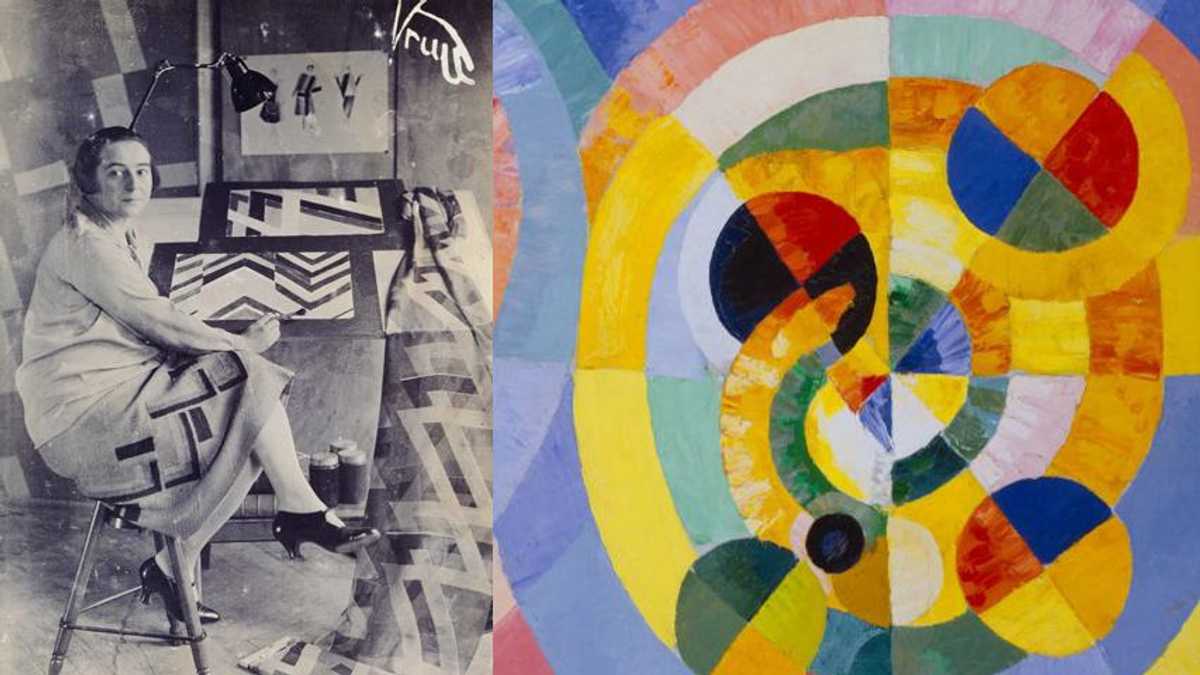
In 1963, Sonya Delaunay donated 117 of her works to France, and a year later, the Louvre Museum held a large exhibition of these works. So, Sonia Delaunay became the first woman whose lifetime retrospective exhibition took place in the Louvre. In 1975, she was awarded the Legion of Honor.
Separately it is worth noting the influence of childhood memories and interaction with Ukrainian culture in early childhood, which influenced the formation of her creative style. In her memoirs, Sonia Delaunay wrote: «I love bright colors. These are the colors of my childhood, the colors of Ukraine».
Oleksandra Ekster (1882 – 1949) – Ukrainian artist, scenographer, one of the founders of the Ukrainian avant-garde, teacher. Oleksandra had Greek and Belarusian roots (her birth name – Oleksandra Grigorovich). Her formation as an artist took place in Kyiv, where she studied, worked and created an art school. Her influence on students was so great that contemporaries called it «Eksterivshchyna».
Oleksandra paid special attention to education. She received her first art education at the Kyiv Art School. In addition, she attended lessons in the workshop of Serhiy Svitoslavsky. Oleksandra continued her studies in Paris, where she took courses at two educational institutions at once: the more classical Académie Julian and the modern Académie de la Grande Chaumière. In Paris, she got acquainted with Cubism and Fauvism, as well as with their creators Pablo Picasso and Henri Matisse.
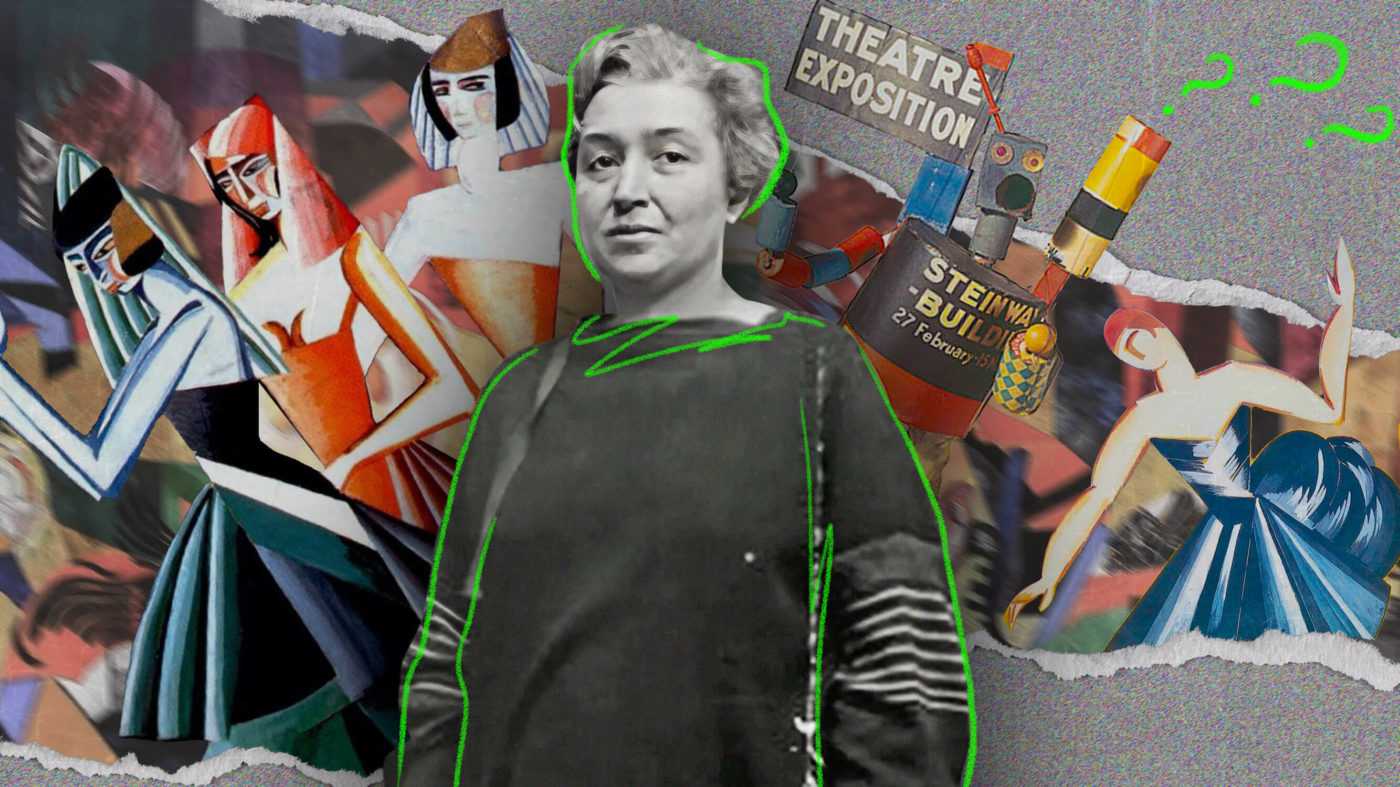
Oleksandra Ekster managed to combine avant-garde trends in art with deep knowledge of Ukrainian folk decorative and applied art. She, together with her friend Natalia Davydova, worked with embroiderers and artists in an embroidery workshop, the purpose of which was to create decorative items of clothing (belts, purses, bags) that were embroidered using traditional techniques, but according to the sketches of avant-garde artists (including Kazimir Malevich).
In 1908, Oleksandra Ekster together with David Burliuk organized the first avant-garde exhibition «Lanka» in Kyiv. But Ekster’s main activity was scenography. She created revolutionary scenery that moved and was connected to the costumes (they were also created by Ekster). In addition, Oleksandra used body art for ballet actors for the first time.
But the stormy times of the beginning of the 20th century, the revolution and the arrival of the Soviets forced the artist to emigrate. She went to Paris, where her close friend Sonia Delaunay worked successfully. Ekster taught art there until the end of her life.
Marie Bashkirtseff (born Maria Bashkirtseva) (1858 – 1884) is an artist, sculptor, and writer. Maria lived a very short life, during which she experienced a lot. She wrote «Diary», which became a bestseller in Europe, and her paintings were bought by the Louvre Museum during her lifetime.
Maria was born in the village of Gavrontsi, in the Poltava region (Gogol’s homeland) in the family of a wealthy aristocrat. From early childhood, the girl showed interest in learning. She had abilities in mathematics and physics, she read Plato and Aristotle in the original, knew many languages, her voice was comparable in octaves to the voice of Maria Callas.
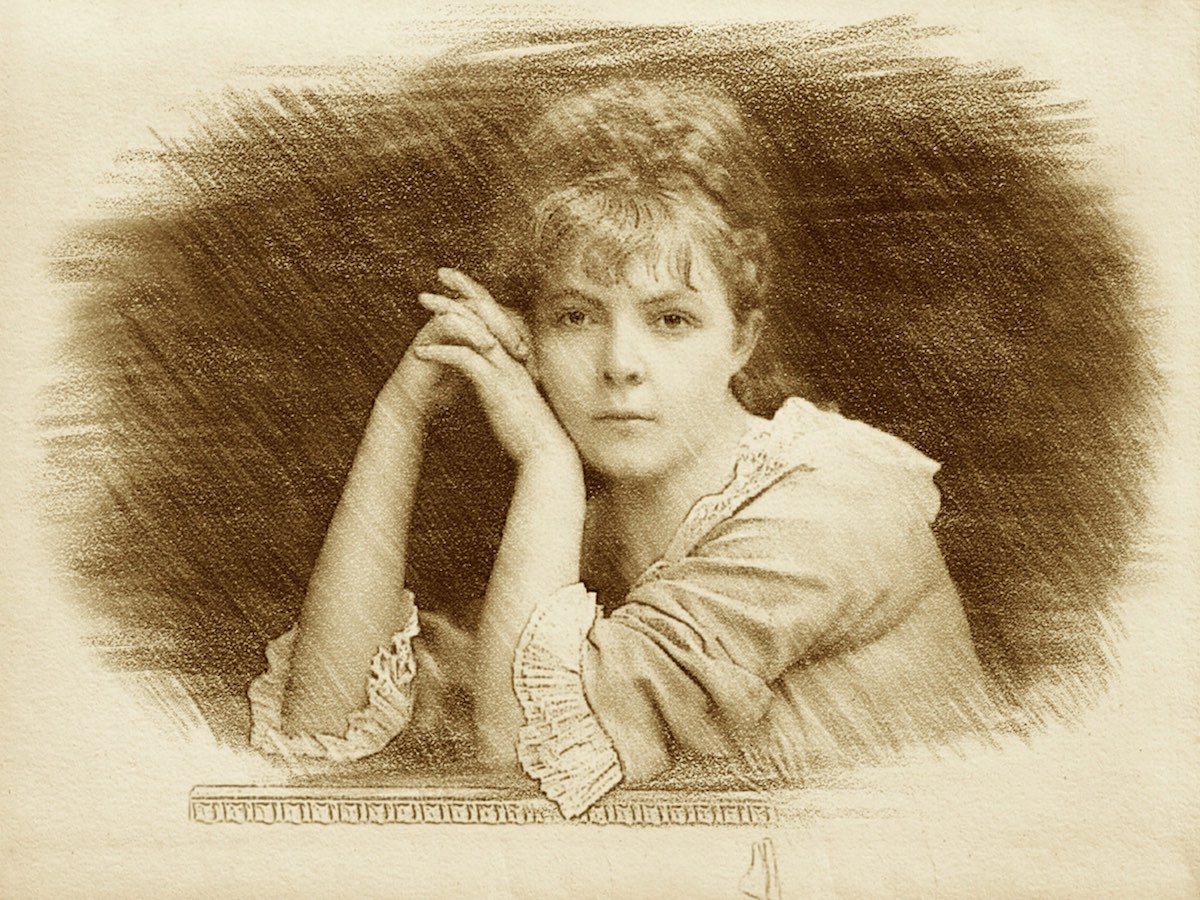
Maria received her art education at the Julian Academy in Paris (where Oleksandra Ekster would later study). In 1879, Maria won a gold medal at a competition of creative works in Paris, received favorable reviews from the most authoritative art critic of that time, Emile Zola.
Some photos of Maria in Ukrainian clothes and her memories of her childhood in Gavrontsi reached our time. She, like other Ukrainian artists, noted the significant influence that the Ukrainian flavor had on her, primarily familiar to Maria from embroidery.
Unfortunately, many of Bashkirtseff`s paintings were lost during World War II. Three of her paintings are currently preserved in Ukraine: in Kharkiv, Dnipro, and Sumy. The Marie Bashkirtseff estate was destroyed in the 20th century.
Sophia Levytska (Sonia Lewitska) (1874 – 1937) is a Ukrainian artist and graphic artist who was fully realized in Paris. The artist was born in Podilia (Podolia) in a wealthy count family. Childhood was spent between the family estate in Podolia and Kyiv. But as soon as the girl turned 19, she was given in marriage. The marriage was not successful, and the future artist gave birth to a sick child. But when the child grown up, Sofia decided to leave her daughter with her family and go to build a career herself. After all, she knew about her artistic talent since she studied with Serhiy Svitoslavsky in Kyiv (in the same workshop where Oleksandra Ekster took her lessons).
Sophia Levytska went to Paris, where she was studying the work of the old masters in the Louvre Museum. She actively worked and exhibited in the Salon of «Independents» and the Autumn Salon. The artist received favorable reviews from art critics, in particular from Guillaume Apollinaire.
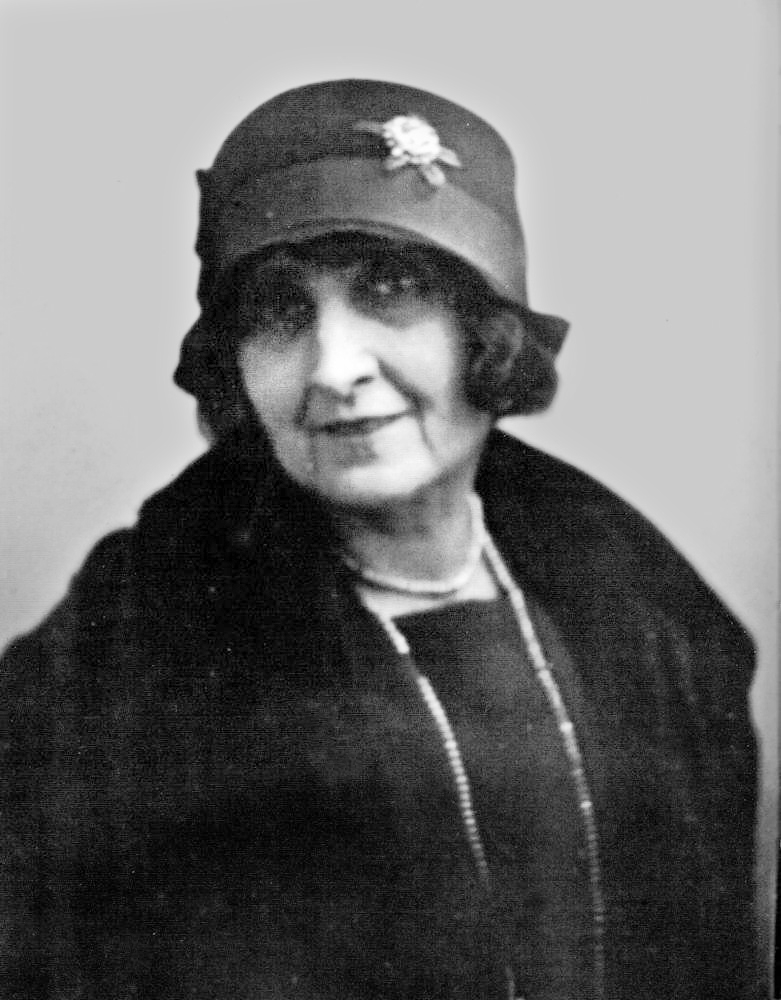
Sonia Lewitska was trying in every possible way to popularize Ukrainian art in France. She was engaged in translation and illustrations for the French edition of Mykola Gogol’s «Evenings on a Farm Near Dikanka». This edition is now a bibliographic rarity and desirable for many collectors.
Lewitska worked a lot in graphics, illustrated books that almost immediately became bibliographic values. Unfortunately, very few of Lewitska’s paintings have survived. World War II destroyed her art heritage as well. Although after her death, a society of her memory was created with the purpose of preserving the artistic heritage of the Ukrainian artist.
Lenore «Lee» Krasner (1908 – 1984) is an American artist of Jewish origin, originally from Ukraine. Lee (her birth name – Lena Krassner) was born in a family of Jewish emigrants from Podilia. She was the sixth child in the family and the first to be born in the United States. The language of communication in the family was Yiddish. In the case of Lenore «Lee» Krasner, we can only talk about her emigrant origin from Ukraine. In contrast to the artists we considered above, Lee had no memories of Ukraine and the influences that the Ukrainian flavor had on Sonia Delaunay or Maria Bashkirtseva. But here it is important to communicate with the world that her parents came to the USA from Ukraine.
Lee Krasner was for a long time in the shadow of her extremely popular husband Jackson Pollock, whose life was definitely not a fairy tale because of his constant drunkenness. And for several years she could not work productively. However, Lee did not forget about her own creativity and found the strength to return to painting. Modern critics see her as a key figure in the transition from the art of the beginning of the 20th century, which came from Europe, to the new artistic currents of post-war America.
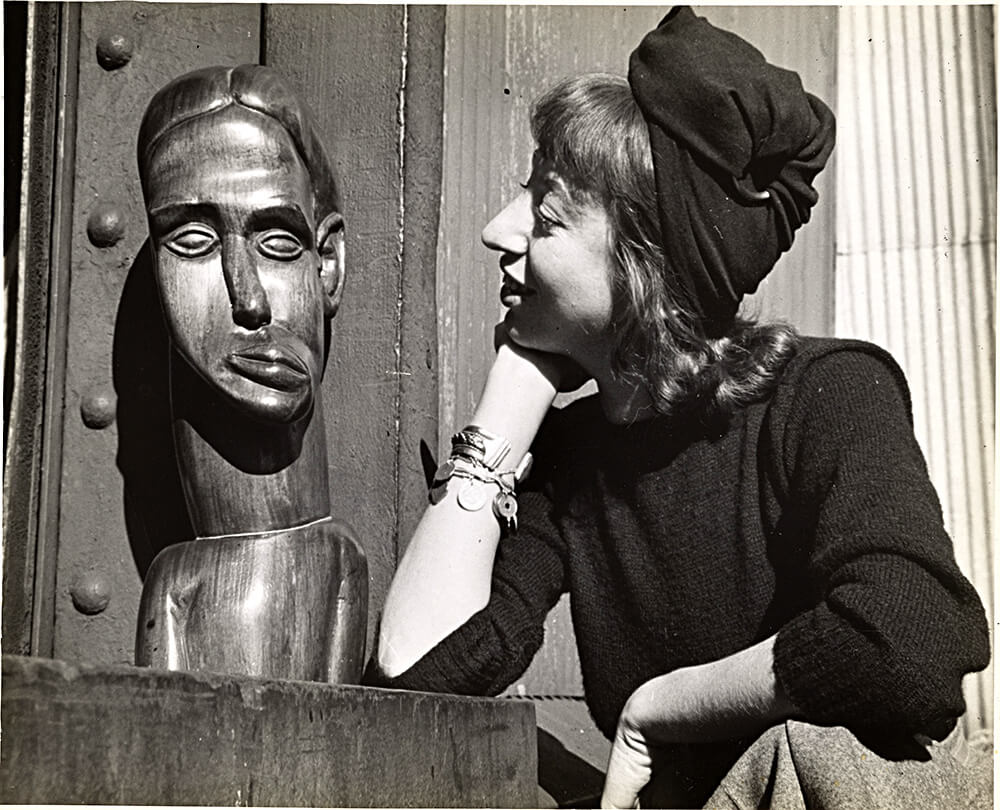
The basis of Lenore «Lee» Krasner’s work was abstract expressionism. MoMA organized a retrospective exhibition of her works already after the artist’s death at the age of 75.
Louise Nevelson (1899 – 1988) is an American artist, sculptor and engraver of Ukrainian origin (born Leah Berliawsky). The future artist was born in Pereyaslav, Poltava Region, and moved to the USA with her parents at the age of 6. Luisa studied in the USA and Europe, as well as with the Mexican monumentalist Diego Rivera.
Louise’s work was greatly influenced by African and Native American art. She successfully exhibited her sculptures in the best galleries in New York, and in 1958 her sculptures were exhibited at MoMA and the Whitney Museum of American Art.
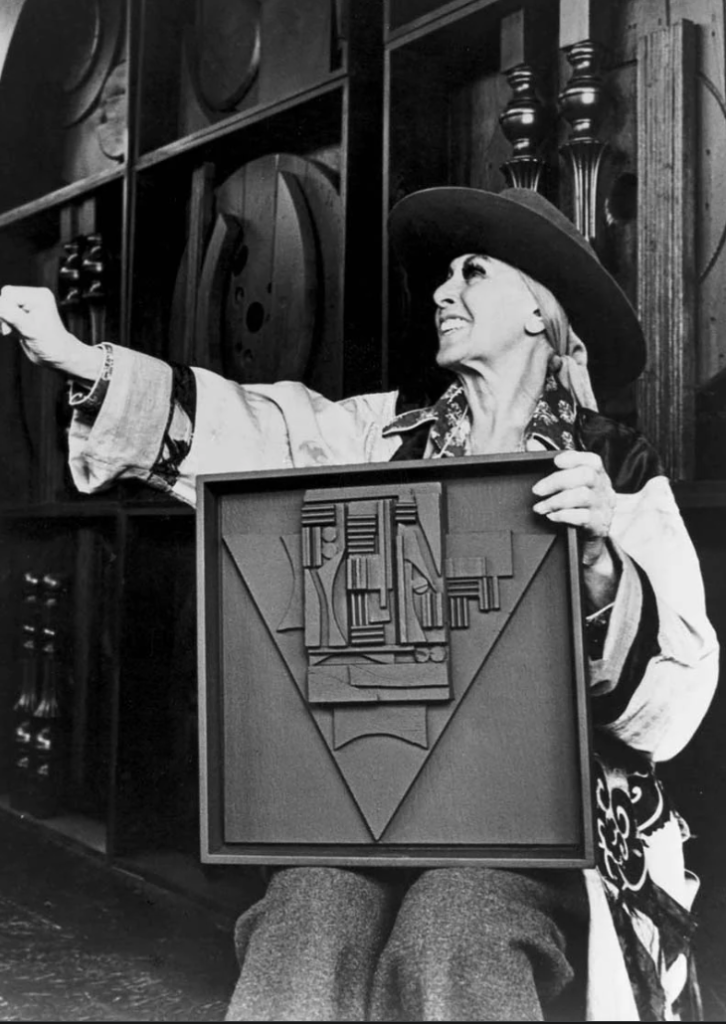
Researchers do not note significant influences of Ukrainian art in the heritage of Louise Nevelson, so we can only talk about the emigrant origin of the artist from Ukraine.
Maria Prymachenko (1908 – 1997) is an Ukrainian artist, a symbol of Ukrainian culture, a representative of naive art. The entire life she spent in the village of Bolotnia in the Kyiv region, with the exception of a short period of study and work in a workshop of decorative and applied arts in Kyiv on the territory of the Lavra.
The style of Maria Prymachenko’s paintings was in the trend of European art of the beginning of the 20th century. Naive art was very popular in the artistic capital of Europe at that time – Paris.

The characteristic images of Maria Prymachenko were amazing animals. Her animals always had defined boundaries of the head and body, like Paleolithic cave paintings in southern France and Spain. The artist signed her works with small phrases or verses that explained what was happening in the painting.
After the Chernobyl tragedy, Maria Prymachenko wrote a series of paintings about this terrible man-made catastrophe. Here, too, there are signatures characteristic of the artist, such as: «May That Nuclear War Be Cursed».
Unlike the artist herself, who lived in one place all her life, her paintings traveled and continue to travel. In 1937, Prymachenko’s paintings were exhibited in Paris, and then in Prague, Montreal and even Beijing.
Kateryna Bilokur (1900 – 1961) is a Ukrainian artist who, along with Maria Prymachenko, is one of the most recognizable Ukrainian artists. A representative of naive art, the main plot of which was flowers from the artist’s own yard.
Kateryna Bilokur lived all her life in the village of Bohdanivka, Kyiv region. She really wanted to study art, but she did not have such an opportunity. Therefore, her genius developed as a result of intuitive attempts to draw the surrounding world. First of all, this concerns the flowers that fill the artist’s paintings like magical lace.
 Kateryna was forced to dig the garden at night, because the head of the collective farm did not give horses for plowing, because their family did not work on the collective farm. And during the day, the artist painted as long as the sun was shining, because there were also problems with lighting in the dark.
Kateryna Bilokur, despite the success of her paintings, never received a passport, because during Soviet times, peasants did not have the right to receive a passport for a long time (serfdom 2.0).
Especially in the work of Kateryna Bilokur and Maria Prymachenko, it is impressive how they managed to see so much beauty, goodness and light in the world despite the fact that they lived in one of the most terrible times during repression and genocide. Actually, such a view of the world is definitely worth learning from these brilliant artists who have become indisputable symbols of Ukrainian painting.
You can learn more about Ukrainian artists at the art lectures at the Lihtaryk art studio, and you can try yourself as an artist by attending oil painting master classes at the art studio in Kyiv. Gift certificates can be purchased for creative master classes and art lectures.
У меня синдром Стендаля сегодня. Утром ходили в Падуанский баптистерий. Смотрели фрески Менабуя. А после обеда у нас было посещение каппелы Скровеньи. Теперь я понимаю , что сделал Джотто для мира. Очень меня все это впечатлило в живую. Привет передала. Мир прекрасен. Падуя очень понравилась:) спасибо за лекции Света!
Lily Golovchak
Our location


